


Newsletter Subscribe
Enter your email address below and subscribe to our newsletter

Rising Above the Noise

 Byocta
The Recipe for Life: A Journey Through Silent Apocalypses is a psychological drama, adventure, and visual novel title developed by Nozori Games. It presents a quiet, melancholic vision of the apocalypse that rejects spectacle in favor of intimate human collapse. The game follows a troubled wanderer traveling across a surreal, decaying world in an RV, meeting individuals whose private catastrophes form the emotional core of the narrative. The apocalypse is not a global event. It is the accumulation of personal despair.
My first impression of The Recipe for Life was a sense of quiet unease. The game presents a world that seems to dissolve at its edges, yet it does so without spectacle or dramatic force. It invites the player into a space where emotional fragility is the true terrain and where the apocalypse is not an external event but an internal erosion of human stability.
The premise appears simple at first glance, yet it carries an unusual psychological weight. It asks the player to inhabit the role of a solitary traveler who moves from one fragile life to another, offering comfort while refusing to confront his own unresolved truths. This initial encounter with the game establishes a tone of introspective tension that persists throughout the experience.

The protagonist does not attempt to save the world. He intervenes in the emotional implosion of strangers while avoiding the fractures within himself. The premise speaks to a familiar human curiosity. It asks what it might feel like to possess a form of emotional power that compels a person to travel from one fragile life to another while refusing to confront his own problems, which are equally serious and life altering.
The primary mechanic is interpersonal intervention. Players engage in extended conversations that require careful listening and empathetic decision making. The game treats mental health topics with seriousness and sensitivity. Trauma, depression, and self destructive ideation are presented without trivialisation. The choices are not about persuasion or moral correctness.
They are about understanding the emotional architecture of each character and responding with care. The player must recognise the shape of another person’s despair and decide how to speak into it without causing further harm. This creates a form of narrative tension that does not rely on external threat. It relies on the possibility that a single sentence may either stabilise a stranger or push him further toward collapse.
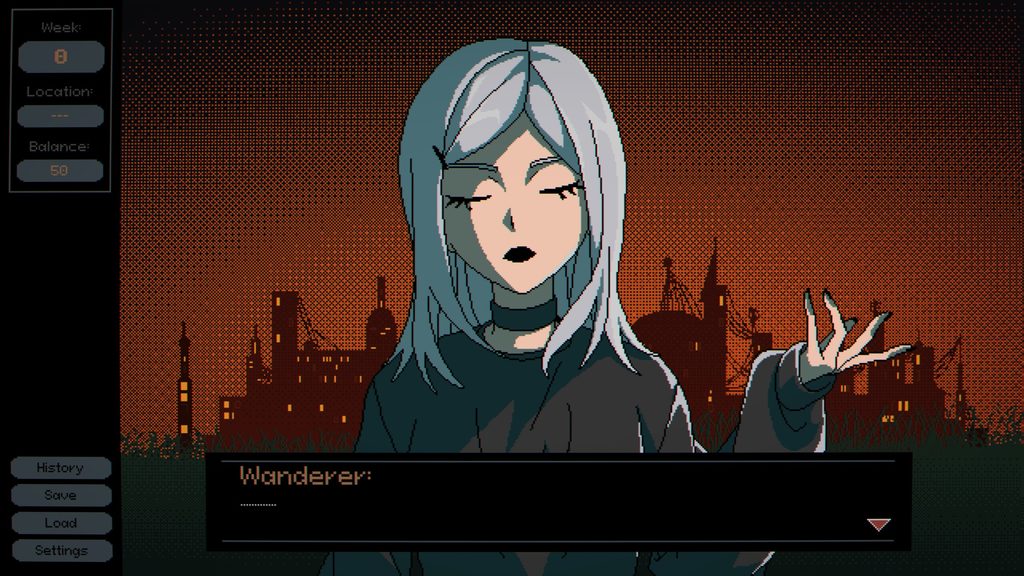
The protagonist’s emotional stability is not infinite. Listening to the despair of others imposes psychological strain. The game requires players to maintain his mental and physical well being through cooking, rest, and small acts of self maintenance. This creates a dual structure in which the player must support others while preventing his own deterioration.
The RV becomes a space of recovery, reflection, and fragile continuity. It is a sanctuary that allows the protagonist to regain composure before returning to the emotional turbulence of the world outside. The rhythm of care becomes a cycle. The player listens, intervenes, retreats, cooks, rests, and prepares to listen again. The game understands that caretaking is both noble and exhausting.

Escalating Visual Horror
As the journey continues, the world’s visual identity shifts from melancholic realism to unsettling psychological horror. The environment begins to reflect the protagonist’s internal state and the cumulative weight of the stories they carry. The surreal imagery does not depict monsters or external threats. It depicts emotional distortion, exhaustion, and the creeping dissolution of hope. The horror emerges from the mind rather than the world.
Tone and Content
The game deals explicitly with taboo subjects including trauma, severe depression, self harm, and suicide. These themes are presented with gravity and respect. The narrative does not sensationalize suffering. Instead, it explores how individuals reach the edge of despair and how fragile human connection can pull them back. The tone is quiet, introspective, and emotionally demanding.

Comparative Positioning
Within the genre, The Recipe for Life occupies a distinctive position. Most apocalyptic narratives depict the end of the world through external catastrophe. This title depicts it through internal collapse. It aligns more closely with psychological visual novels that explore emotional fragility rather than supernatural threat. The emphasis on empathy, listening, and mutual care gives the game a unique identity within the landscape of narrative driven indie titles. It is not concerned with monsters, cosmic events, or environmental ruin. It is concerned with the quiet implosions that occur when a person can no longer carry the weight of his own thoughts.
The emotional appeal of the game is unusual. Some players will connect with it not because they are damaged, but because they have lived with the sensation of feeling precarious and misunderstood. The game invites them to inhabit a role that allows them to help others while postponing their own reckoning. It asks whether emotional caretaking can become a refuge from personal truth.
It asks whether the act of saving strangers can become a way to avoid acknowledging one’s own collapse. The premise is bold. It encourages players to consider the psychological cost of empathy and the strange allure of borrowed purpose.
The emotional depth of the game is not infinite. It does not descend into the darkest corners of human psychology. It remains shallow enough to avoid overwhelming the player, yet deep enough to create a sense of genuine risk. The puzzle is the emotional landscape of a stranger’s mind. The question is how successful a player can be when the stakes involve another person’s stability. The game does not offer perfect solutions. It offers moments of connection that feel fragile and temporary. This creates an experience that is both compelling and unsettling.
The Recipe for Life succeeds because it reframes the apocalypse as a human experience rather than a cosmic event. The protagonist’s journey across a decaying world becomes a meditation on vulnerability, connection, and the quiet ways people fall apart.
Nozori Games delivers a work that is emotionally challenging, aesthetically unsettling, and thematically coherent. It is a story about listening, surviving, and finding meaning in the silent catastrophes that shape human life. It is a niche title that will resonate most strongly with those who are mentally and emotionally curious, those who understand that the most dangerous apocalypses are often the ones that unfold quietly inside a single human being.
Review Pending Official release: We think if you are interested in the topic, then this is a title to watch out for. As right now you can only play the demo.
Rating 2 out of 5 Thumbs: 👍 👍 (within the genre as is)
(Upon completion Rating 3 out of 5 Thumbs: 👍 👍👍)
I awarded this title three thumbs because it occupies a controversial space within its genre. The mechanical structure and moment to moment gameplay are standard, yet the subject matter and the willingness to address taboo psychological themes elevate the experience beyond conventional expectations. The game ventures into the emotional dramas of strangers with a level of sincerity that becomes unexpectedly compelling.
But subtracted one thumb as the game is yet unfinished and we could not speak to the systematic depth of the interactions in the longer play through as much could change at release.
It is precisely this depth that creates a point of caution. If you or someone you know is currently experiencing significant emotional strain, this may not be an appropriate title to engage with. Viewer discretion is strongly advised. The game is bold, thoughtful, and thematically ambitious, but it demands a level of emotional resilience that not every player will possess.

The Recipe for Life: A Journey Through Silent Apocalypses play the demo :