

Newsletter Subscribe
Enter your email address below and subscribe to our newsletter

Rising Above the Noise

 Byocta
Progression based games succeed when players believe their decisions matter. Randomness can be an effective tool, but it works best when it exists alongside meaningful choices that allow players to influence outcomes. Based on its current demo, Heroll: IF struggles to establish that balance.
At first glance, the game presents a familiar formula of equipment upgrades, statistical progression, and periodic minigames intended to provide variety. The issue is not the presence of these systems but the way they interact. Too often, progression appears governed by luck rather than judgment, resulting in an experience that feels less engaging than other games operating within the same space.
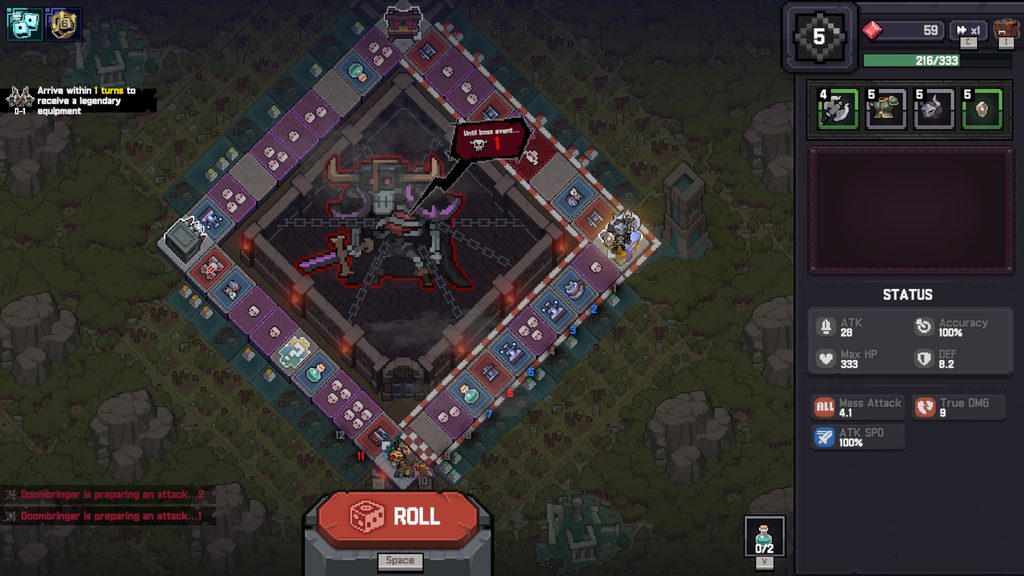
The most immediate challenge facing Heroll: IF is how little it asks of the player.
Much of the experience consists of initiating actions and watching results unfold. This approach is not inherently flawed. Numerous idle games, auto battlers, and progression focused titles have demonstrated that limited player input can still produce compelling gameplay when strategic decisions remain at the forefront.
The problem is that Heroll: IF rarely creates the impression that decisions carry significant weight.
Equipment progression illustrates this clearly. During play, common items frequently appeared capable of outperforming rarer equipment. While such outcomes can occasionally support interesting build decisions, the game currently does little to explain why one item should be preferred over another. As a consequence, item rarity loses much of its value as a reward mechanism.
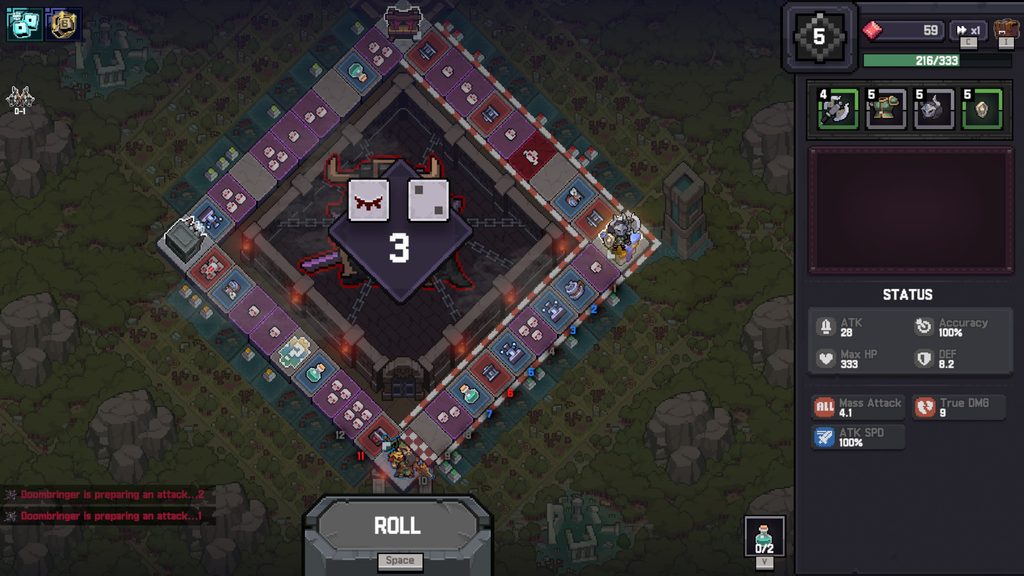
This creates a progression system that often feels arbitrary. Rather than rewarding understanding or planning, advancement appears closely tied to the quality of random drops. When players cannot confidently view rare or legendary equipment as meaningful milestones, the satisfaction of progression begins to diminish.
The timing based minigames offer a partial solution. These moments introduce direct player involvement and provide a welcome break from the otherwise passive gameplay loop. They inject activity into the experience and briefly allow success to rest on player performance.
However, they rarely deepen the surrounding systems. Instead, they function primarily as diversions. They interrupt the loop rather than enrich it, creating momentary engagement without addressing the larger issue at the heart of the game.

Other games within this genre have demonstrated stronger ways of combining randomness with player agency. Slotbound, for example, presents uncertain outcomes while still encouraging planning, optimisation, and strategic adaptation. Success remains influenced by chance, but players retain a clear sense of ownership over their achievements.

Many comparable titles also use minigames as natural extensions of their core mechanics. Rather than serving as isolated activities, these moments reinforce the broader progression systems and contribute to the player’s decision making process.
By comparison, Heroll: IF currently feels too dependent on luck and too detached from player choice. Its progression systems create the appearance of depth without consistently providing opportunities for meaningful influence. The result is a gameplay loop that risks becoming repetitive long before its ideas have fully matured.
That assessment should be viewed within the context of the game’s planned release on 2 November 2026. Additional systems, balance adjustments, progression mechanics, and unrevealed features may significantly alter the final experience.
Based solely on what the demo currently presents, however, Heroll: IF leaves the impression of a game where advancement depends more on fortunate outcomes than thoughtful decisions, and where randomness too often occupies space that could have been filled by genuine depth.

Heroll: IF
I think the strongest thesis here is not that the game is bad.
It is:
Heroll: IF struggles to convince the player that their decisions matter.