


Newsletter Subscribe
Enter your email address below and subscribe to our newsletter

Rising Above the Noise
 Byocta
Hela Of Mice & Magic
When evaluating the aesthetic trajectory of interactive entertainment, one frequently observes an industry obsessed with scale, violence, and the subjugation of virtual spaces. For decades, high fantasy games have treated the natural world as a digitized arena.
When evaluating the aesthetic trajectory of interactive entertainment, one frequently observes an industry obsessed with scale, violence, and the subjugation of virtual spaces. For decades, high fantasy games have treated the natural world as a digitized arena. Trees are timber to be harvested. Fauna consists of passive ambient decorations or aggressive beasts carrying arbitrary experience points. Ecosystems exist merely as topographical backdrops for grand, violent narratives. Into this landscape steps Hela Of Mice and Magic, a title that explicitly rejects these long standing conventions in favor of a different spatial and philosophical framework.
Hela Of Mice & Magic
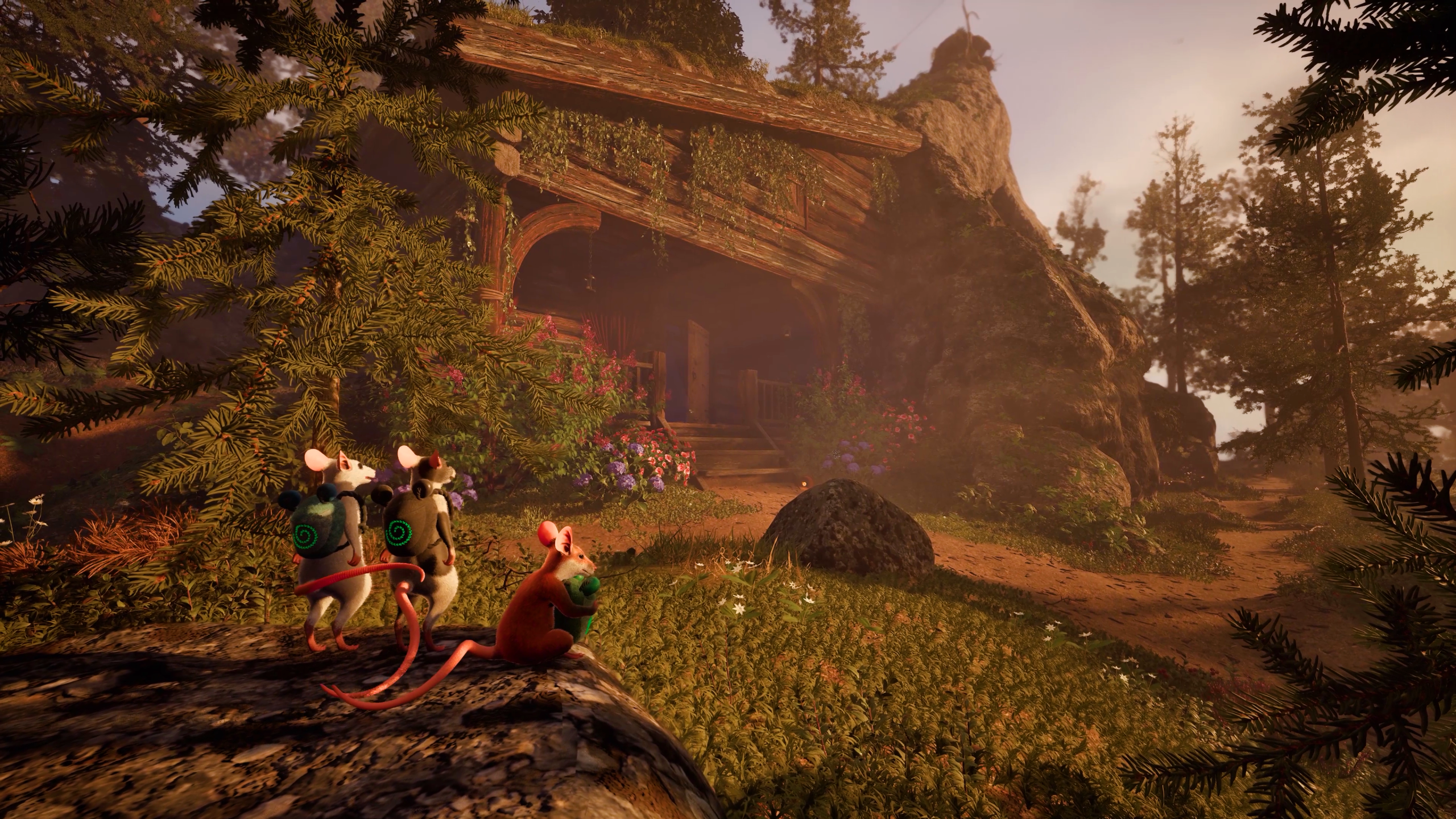
Developed by Windup Games, a studio populated by veterans behind the Unravel series, Hela Of Mice and Magic is a one to four player cooperative adventure. Players step into the tiny paws of a mouse serving as the familiar to a benevolent witch who has fallen ill. Supported via solo play, split screen, and online cooperation, the title presents a mechanical suite grounded in environmental navigation. At the center of this movement engine is a physics based froggy backpack that functions as a grappling tool, glider, and physical anchor, allowing a tiny rodent protagonist to scale domestic interiors and sprawling forest canopies alike.
What distinguishes Hela Of Mice and Magic within the broader landscape of cozy and fantasy games is its radical shift in spatial perspective and physical scale. By shrinking the player perspective down to a few inches off the forest floor, the developers transform the mundane into the monumental. A fallen pinecone becomes a massive structural barricade. A gentle stream turns into an impassable, rushing ocean. A kitchen table resembles a high altitude plateau.
In traditional open world titles, traversal is often a trivialized means to an end, mitigated by fast travel mechanics or mounts designed to erase the terrain. In Hela, the terrain is the primary interface of play. The physics based interaction model forces players to actively read the environment. To cross a gap, one cannot simply press an action button to trigger an automated vaulting animation. Players must evaluate branch elasticity, leverage momentum via the froggy backpack, or manipulate physical props like bark fragments to construct makeshift bridges. By making nature something that must be negotiated with rather than effortlessly overridden, the design instills a profound sense of presence and respect for the micro geometry of the wilderness.

Furthermore, Hela treats the environment as an expressive, living entity with its own behavioral rhythms rather than a passive, static canvas upon which player agency is aggressively stamped. Inspired directly by the flora and fauna of Northern Sweden, the world is handcrafted with an extraordinary attention to naturalistic detail. This design philosophy is nowhere more evident than in the audio architecture of the game. The soundscape, composed by Unravel veterans Frida Johansson and Henrik Oja, operates as a dynamic, reactive barometer of spatial safety and wildness. Near human settlements and the cottage of the witch, structured, comforting folk melodies dominate the mix. As the player ventures deeper into the untamed forest, these musical arrangements recede, giving way to an organic tapestry of rustling foliage, rushing water, creaking timber, and ambient animal calls. Nature is not silenced to make room for a bombastic orchestral score. Rather, nature is the score.
This environmental reverence directly informs the ludic systems of the game. The mechanics explicitly reject the transactional resource extraction tropes popularized by modern survival crafting titles. Players do not chop down forests or strip mine hillsides. Foraging in Hela is predicated on harmony and restraint. Ingredients are collected in small, sustainable quantities, often as rewards for resolving environmental distress or assisting local wildlife. The environment does not exist to be depleted. It exists to be understood, healed, and maintained.

The fantasy genre has historically bifurcated witchcraft into two rigid categories: dark, dangerous occultism or utilitarian, industrial alchemy. Hela systematically dismantles both paradigms. Magic is stripped of its grand, world shattering pretentions and redefined as a quiet tool for localized care. The remedies concocted within the cottage do not bestow destructive combat capabilities or grant immunity to elemental damage. Instead, they produce modest, utility focused effects such as granting temporary mobility enhancements or clearing environmental blight. Magic is framed not as a weapon to dominate others, but as an extension of empathy. This framing asserts that meaningful heroism does not require the wielding of destructive power.
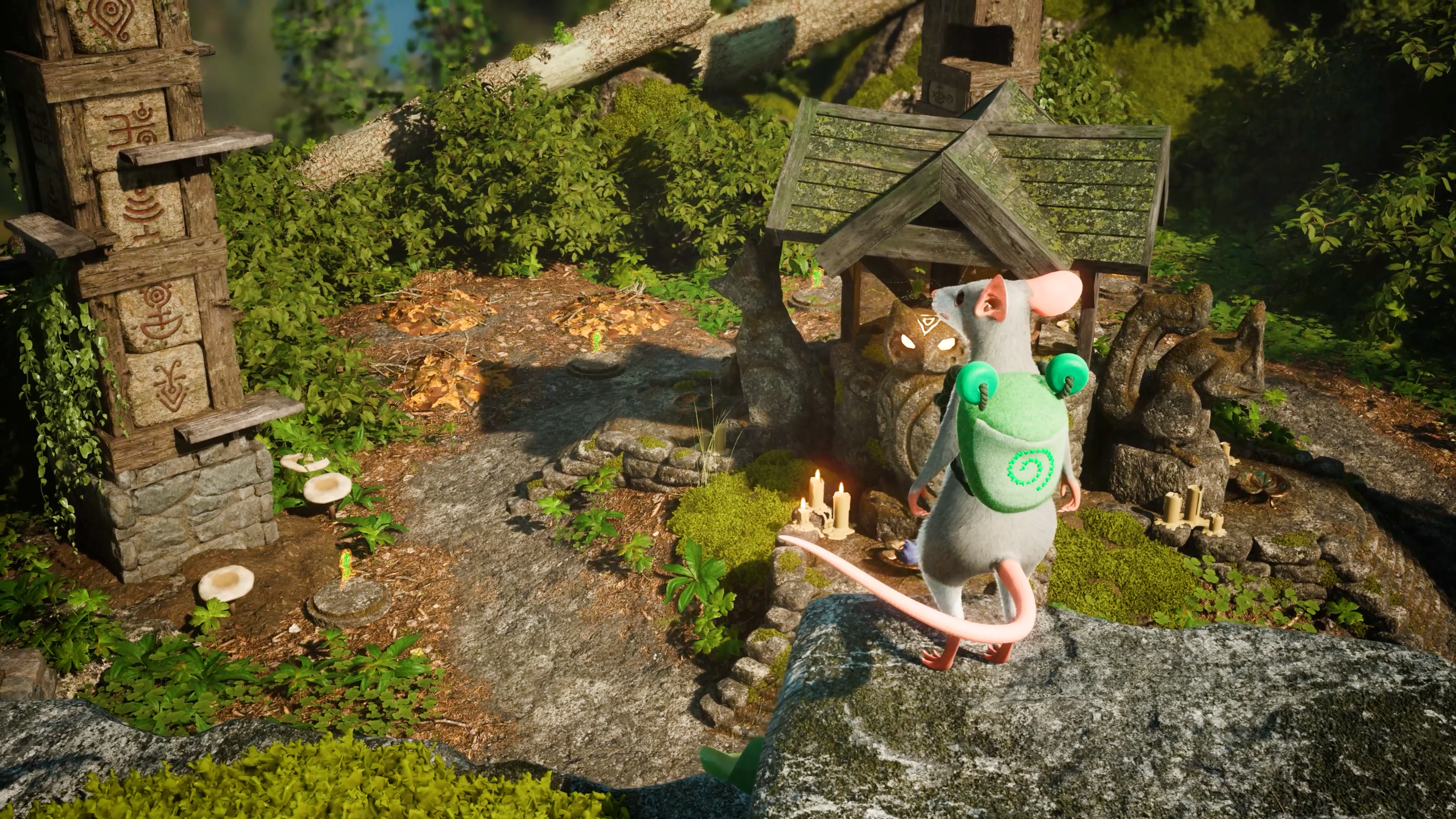
This ecological framework extends directly into the cooperative design of the title. In an industry where multiplayer modes frequently prioritize competitive performance, efficiency optimization, or aggressive tactical synchronization, Hela fosters an atmosphere of shared exploration and playfulness. Because the game utilizes a physics driven world, cooperative mechanics emphasize creative problem solving over mechanical execution. Players must physically assist one another by anchoring grappling lines, balancing heavy objects to create seesaw lifts, or coordinating the distribution of gathered ingredients. By decoupling cooperative play from combat encounters, Hela allows players to experience a shared state of wonder, encouraging them to pause, observe, and engage with the environment at a measured, deliberate pace.
Hela Of Mice and Magic represents a thoughtful, necessary recalibration of how fantasy worlds can be constructed. Windup Games has fashioned an experience that stands noticeably apart from its genre peers, reminding us that sometimes the most profound adventures are found in taking the time to look closely at the moss growing on a forest floor.
Hela: of Mice & Magic on Steam Planned Release Date: Q4 2026
Other interesting titles:

Well Dweller Review: A Dark Fairy‑Tale Metroidvania