


Newsletter Subscribe
Enter your email address below and subscribe to our newsletter

Rising Above the Noise
 Byocta
The survival horror landscape has long been defined by a relentless pursuit of environmental cohesion. From the fixed camera angles of early polygon rendering to the photorealistic ray traced corridors of contemporary major studio releases, game design routinely relies on a unified visual plane to anchor player immersion. Tenebris Somnia, developed through a partnership between Argentine filmmaker Andrés Borghi and programmer Tobías Rusjan of Saibot Studios, explicitly rejects this foundational tenet.
Published by New Blood Interactive and scheduled for release on October 16, 2026, across PC Windows, Nintendo Switch, Nintendo Switch Two, PlayStation Five, and Xbox Series X and S, the title constructs its horror not through seamless immersion, but through deliberate, jarring medium switching.
By fusing retro two dimensional Famicom style pixel art gameplay with tactile, live action full motion video cutscenes, Tenebris Somnia builds a complex mechanical and narrative construct. The game utilizes aesthetic dissonance as its primary engine of suspense, forcing the player to constantly navigate the cognitive friction between low resolution abstraction and visceral physical reality.
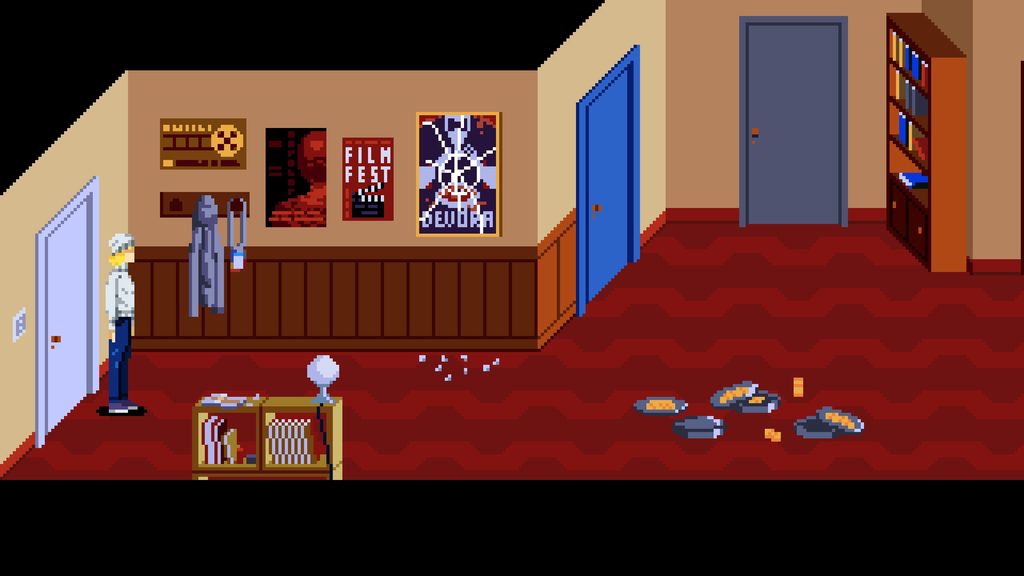
The foundational layer of the experience anchors itself securely in classical two dimensional survival horror conventions. The player guides the protagonist, Julia, through restrictive side scrolling environments that demand careful navigation, deliberate item collection, and environmental puzzle solving. The interactive framework is minimalist by design. Movement is confined to a horizontal plane, turning every room into a tightly constrained spatial puzzle where enemy placement and item locations carry immediate, high stakes consequences.

Mechanically, the title relies on strict resource management reminiscent of foundational late twentieth century horror design. Inventory capacity is tightly throttled, forcing players to evaluate the immediate utility of key items versus defensive tools. Combat within this two dimensional grid is intentionally deliberate, prioritizing spatial awareness, timing, and conservation over athletic reflex.
Within this low fidelity rendering style, fear operates through cognitive completion. The pixelated sprite representation of a monster provides geometric boundaries and mechanical rules, requiring the player’s imagination to supply the horror. The tension is systemic, born from spatial vulnerability, low health margins, and the constant threat of resource depletion.
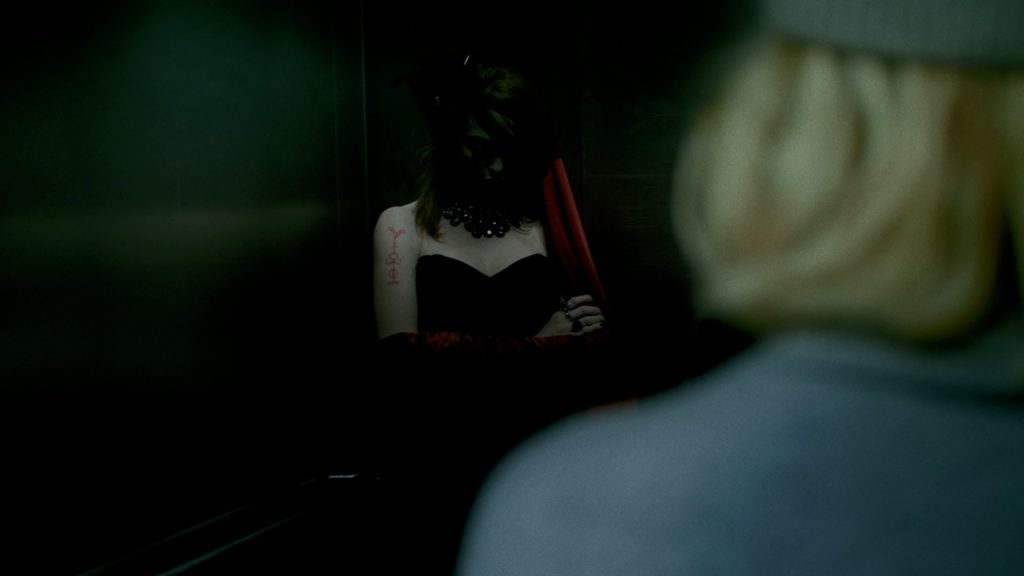
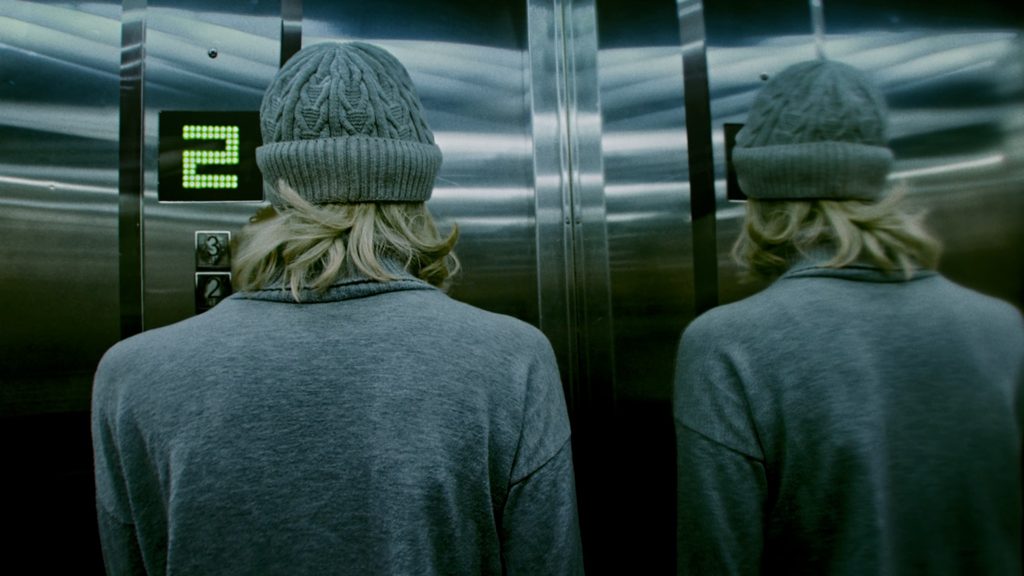
The rhythmic security of the two dimensional gameplay loop is periodically disrupted by major narrative milestones. When Julia reaches critical plot intersections, the game abandons its pixelated framework entirely, shifting seamlessly into full motion video sequences directed by Borghi. These live action segments feature performances by Clara Kovacic as Julia, alongside Yael Tesouro, María Eugenia Rigón, and Esteban Prol.
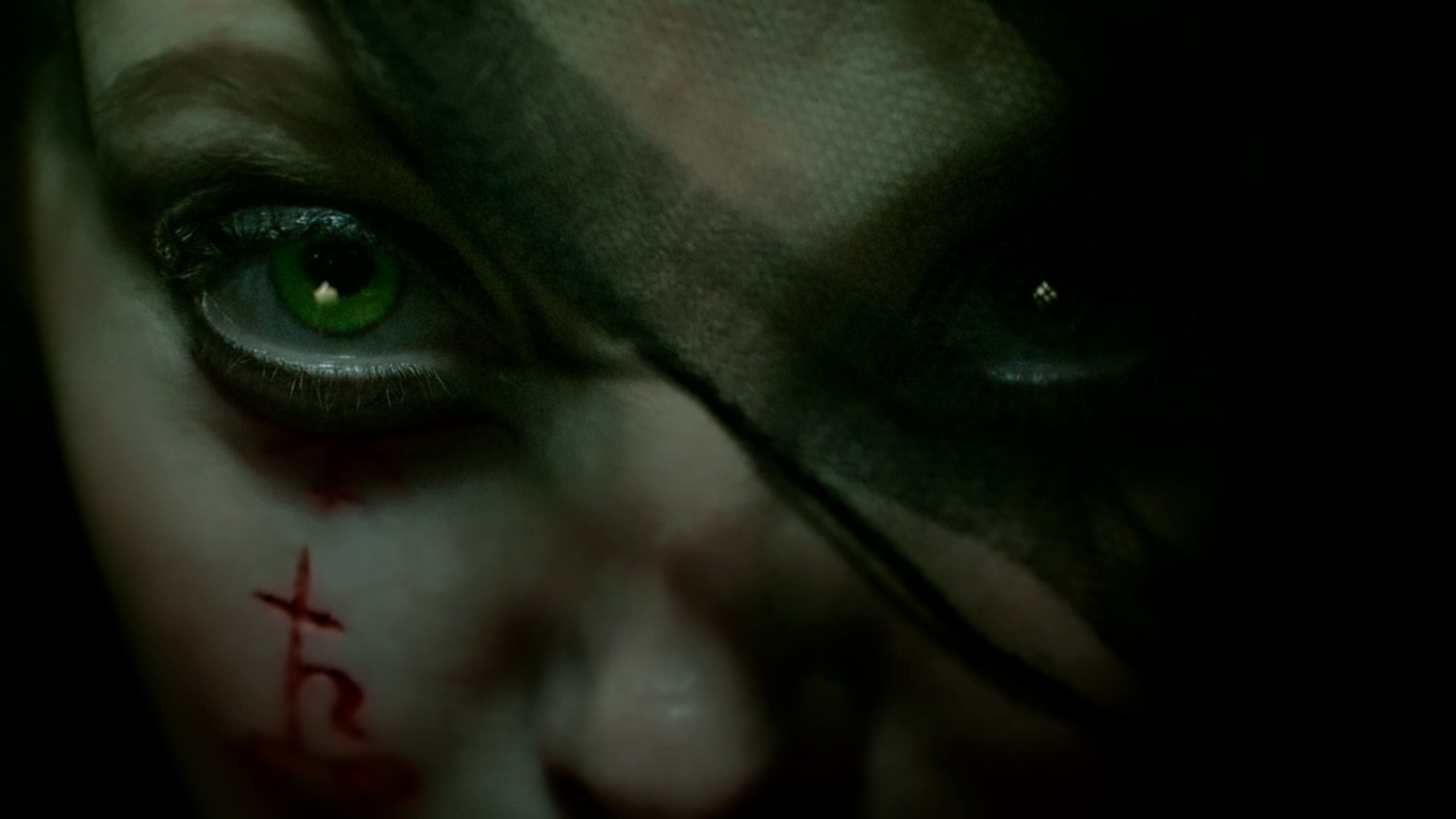
Crucially, these cinematics reject digital set construction and clean computer generation. Borghi draws upon practical film technique, utilizing real physical props, practical creature prosthetics, and grounded set lighting produced by an Argentine film crew.
The transition from a low resolution pixelated grid to an authentic, physical live action frame creates a profound psychological shock. The sudden shift forces the mind to instantly translate symbolic pixel arrangements into raw human anatomy and tactile creature design. The live action footage does not merely serve as narrative exposition; it functions as a perceptual destabilizer. By contrasting abstract digital play with physical body horror, the medium transition itself becomes the principal source of dread.
To measure the structural efficacy of Tenebris Somnia, it must be evaluated alongside established paradigms within the survival horror spectrum. The genre generally divides into three primary lineages: classical fixed camera survival horror, modern third person atmospheric horror, and historical full motion video adventures.
Modern retro revival titles like Signalis or the foundational Clock Tower rely heavily on visual continuity. Signalis maintains an unwavering low polygon aesthetic punctuated by anime styled illustrations, preserving a unified tone throughout its runtime. In contrast, Tenebris Somnia intentionally destroys visual unity. Where Signalis uses aesthetic consistency to build a melancholic atmosphere, Tenebris Somnia utilizes visual fracture to simulate the jarring, erratic logic of severe nightmare states.
Late twentieth century full motion video titles often struggled under the weight of their own media. Games like Phantasmagoria attempted to replace traditional interaction entirely with interactive video, resulting in static, unresponsive gameplay loops that detached the player from spatial agency. Tenebris Somnia avoids this pitfall by maintaining a clear separation of labor: the two dimensional pixel engine handles mechanical agency, spatial navigation, and resource management, while the live action film segments manage emotional escalation and visceral horror encounters.
Tenebris Somnia positions itself as an innovative hybrid within survival horror design. By combining the strict spatial rules of Famicom era exploration with the raw physicality of practical full motion video, the title establishes a dynamic dialogue between abstraction and reality.
The practical live action cutscenes fundamentally recontextualize the pixelated gameplay that follows them. Once a creature has been witnessed in high definition flesh and blood, returning to the two dimensional pixelated world does not alleviate tension. Instead, the low resolution sprites become alarming abstractions, serving as constant reminders of the physical terror lurking behind the digital screen.
Rating 3 out of 5 Thumbs: 👍 👍👍
The reconciliation of these two distinct traditions enables Tenebris Somnia to turn the act of media switching itself into an unforgettable mechanism of horror….!
Screen shots:


https://store.steampowered.com/app/2121510/Tenebris_Somnia
The Most Captivating Witchcraft Adventures of 2026 and Beyond – Octavius Reviews



[…] Tenebris Somnia […]
[…] Tenebris Somnia https://www.octaviusreviews.com/indie-horror/tenebris-somnia/ METAMORPHOSIS […]
[…] https://www.octaviusreviews.com/upcoming-releases/neverway/ Tenebris Somnia https://www.octaviusreviews.com/indie-horror/tenebris-somnia/ The Autopsy of Entropy: A Design […]
[…] Tenebris Somnia […]