


Newsletter Subscribe
Enter your email address below and subscribe to our newsletter

Rising Above the Noise

 Byocta

Modern AAA blockbusters present themselves as the pinnacle of narrative craft. They offer cinematic fidelity, orchestral scoring, motion captured performances, and meticulously choreographed emotional beats. Yet beneath this spectacle lies a structural hollowness that becomes more visible with every new release. These games promise agency, consequence, and personal investment, but they deliver predetermined outcomes wrapped in the illusion of choice.
The player is invited to participate, yet the world refuses to change in response to that participation. The result is a narrative experience that is visually impressive yet dramatically inert. In contrast, a single drunken dwarf in a simulation driven world can generate more authentic tragedy than a one hundred million dollar scripted blockbuster. The reason is simple. True drama emerges from systems, not scripts.
The narrative paradox at the heart of modern AAA design begins with canonical absorption. Studios want to maintain a single authoritative timeline that governs the entire intellectual property. They want consistency across sequels, spin offs, and transmedia expansions. This desire for consistency creates a gravitational pull that drags every possible branch toward a single canonical endpoint.
The player may choose differently, yet the universe will not acknowledge those choices. The world demands coherence, and coherence demands constraint. The result is a narrative corridor disguised as a branching path. The player selects from multiple options, yet only one option is ever recognised as real by the overarching franchise. Every alternative becomes decorative. The player senses the rails beneath the surface. The promise of agency collapses into performance.
This collapse becomes most visible when a franchise attempts to absorb player choices directly into official lore. The moment a studio declares that one ending is canon, every other ending becomes a non event. The player is told that their decisions matter, yet the universe quietly invalidates them. Branching paths become performative because only one path is validated as real.
The player is not authoring a journey. The player is performing correctness. The narrative becomes a ritual rather than a space for discovery. The world reacts only in ways that preserve the official timeline. The player is free only within the boundaries that the canon permits.
The illusion of agency in modern blockbusters is reinforced by the prioritisation of cinematic fidelity over meaningful choice. Recent high budget releases invest extraordinary resources into visual spectacle, yet they guide every player toward identical outcomes. Emotional beats are delivered with orchestral precision, yet they occur at predetermined moments regardless of player action.
The player is invited to feel, but not to influence. Predictable choices lead to narrative fatigue. The world feels polished yet inert. The player senses that their decisions are cosmetic rather than consequential. Replay value collapses because the experience is identical each time.
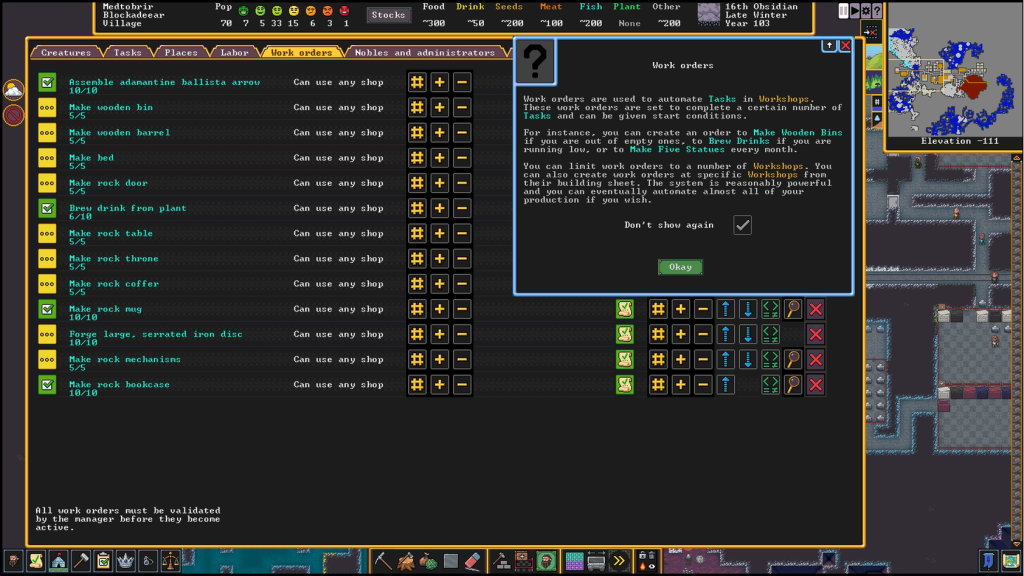
Simulation driven titles operate on a fundamentally different philosophy. They treat the world as a dynamic system rather than a stage for scripted performance. They track physical, mental, and social variables with extraordinary granularity. In Dwarf Fortress, every dwarf possesses individual needs, memories, injuries, relationships, skills, and emotional states.
These variables collide to produce dynamic cascades. A dwarf may become stressed due to hunger. The stress may trigger a tantrum. The tantrum may lead to a tavern brawl. The brawl may injure a crafts dwarf. The injury may reduce production. The shortage may weaken the fortress. The weakened fortress may fall. None of this is scripted. All of it emerges from systemic interaction.
This emergent chaos produces genuine narrative stakes because it arises from the logic of the world rather than from the dictates of canon. The player feels authentic empathy because the tragedy is not imposed. It is earned. It is the result of decisions, miscalculations, and cascading failures.
A single drunken dwarf can generate a more heartbreaking tragedy than any cinematic cutscene because the moment belongs to the player. It is not a performance. It is a consequence. It is not a predetermined emotional beat. It is an unscripted event that emerges from the collision of systems.
The architecture of procedural trauma in simulation driven games creates a form of narrative depth that scripted titles cannot replicate. Simulation engines track variables down to individual limbs, emotional memories, and social dynamics. They allow the world to respond to player action in unpredictable ways. They create tension through uncertainty rather than through predetermined plot points.
They generate stories that feel personal because they arise from the player’s own decisions. They produce drama that cannot be absorbed into a single canonical timeline without erasing the individuality that gives it power.
The contrast between simulation and cinema reveals the structural limitations of modern AAA storytelling. Scripted titles rely on prewritten plot points to generate tension. Simulation driven titles rely on dynamic system failure. Scripted titles dictate long term impact through franchise lore. Simulation driven titles allow long term impact to be defined by personal playstyle. Scripted titles create passive performers. Simulation driven titles create active coauthors.
This distinction can be expressed through a simple conceptual structure.
┌─────────────────────────────────────────────────────────┐ │ Traditional Scripted Path │ │ Rigid Canon leads to Linear Objective leads to Illusion│ └────────────────────────────┬────────────────────────────┘ │ ▼ ┌─────────────────────────────────────────────────────────┐ │ Emergent Mechanical Model │ │ System Rules lead to Unscripted Friction lead to Story │ └─────────────────────────────────────────────────────────┘
The future of narrative design belongs to systems that embrace uncertainty, friction, and consequence. True drama emerges when the world is allowed to respond to player action in unpredictable ways. True agency emerges when the player is allowed to generate meaning rather than reenact meaning chosen for them. Dwarf Fortress demonstrates that simulation driven chaos produces narrative stakes that scripted blockbusters cannot match. The solution is not to eliminate canon. The solution is to recognise that true narrative power lives within complex systems rather than within the predictable rails of high budget corporate puppetry.
Rating 3 out of 5 Thumbs: 👍 👍👍 (Generates Better Drama Than Any Scripted AAA Title Today)
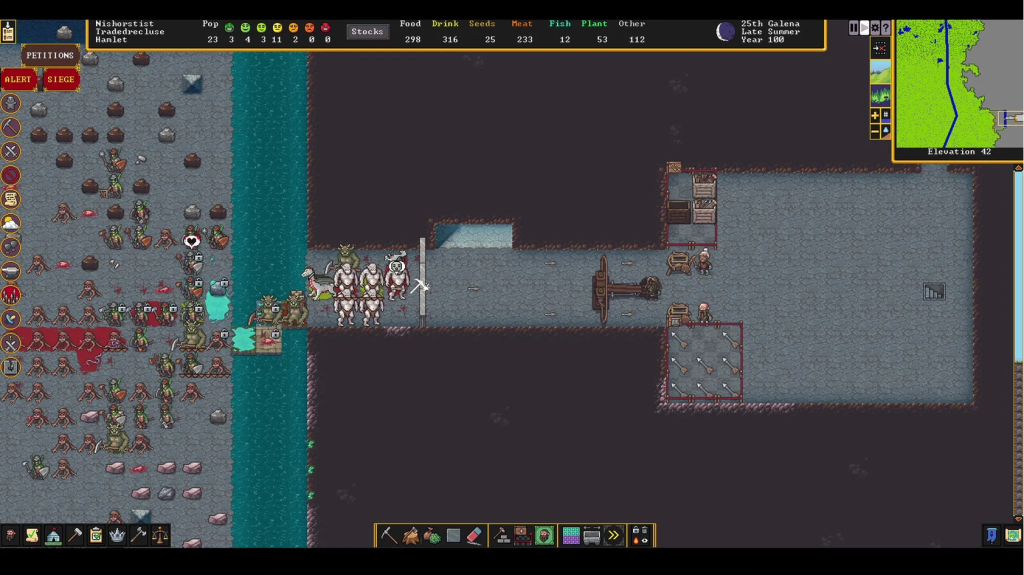
Dwarf Fortress GOG Dreamlist | GOG.COM with a vote to bring the game to GOG to perseve the game.
https://store.steampowered.com/app/975370/Dwarf_Fortress



[…] Why Dwarf Fortress Generates Better Drama Than Any Scripted AAA Title Today https://www.octaviusreviews.com/indie-reviews/why-dwarf-fortress-generates-better-drama-than-any-scripted-aaa-title-today/ Share your love […]