

Newsletter Subscribe
Enter your email address below and subscribe to our newsletter

Rising Above the Noise

 Byocta
Survival crafting has become one of the most crowded genres in modern gaming. Base building, resource gathering, and exploration loops now struggle to distinguish themselves from an increasingly standardized formula.
Honeycomb: The World Beyond enters this competitive landscape with an unusual proposition. Rather than casting players as settlers, warriors, or engineers, it places them in the role of a bioengineer tasked with studying and manipulating alien life on the planet Sota7. The game’s central premise revolves around exploration, scientific experimentation, crossbreeding organisms, and adapting to an unfamiliar ecosystem while supporting humanity’s future.
RELEASE DATE:
8 Sep, 2026
On paper, Honeycomb: The World Beyond presents one of the more intriguing premises currently found within the survival crafting genre. Rather than relying on conventional combat loops or large scale construction systems, the game attempts to distinguish itself through xenobiology, genetic experimentation, ecological interaction, and scientific discovery. It is a concept that immediately separates itself from the growing sea of formulaic survival titles.
The game’s strongest asset is its central idea. The prospect of studying alien lifeforms, harvesting genetic material, crossbreeding plants, and manipulating ecosystems offers a refreshing alternative to the increasingly familiar resource grind that defines much of the genre. Honeycomb consistently demonstrates creativity in its world design and thematic direction, establishing an identity that is recognizably its own.
The challenge is that the execution frequently struggles to match the strength of the premise.
While the genetic engineering systems form the foundation of the game’s identity, players expecting deep scientific experimentation may find the implementation more limited than anticipated. The genetics mechanics are meaningful and integrated into progression, but they rarely evolve into the kind of complex system mastery that the underlying concept suggests. The result is a mechanic that remains interesting throughout much of the experience without fully reaching its potential.
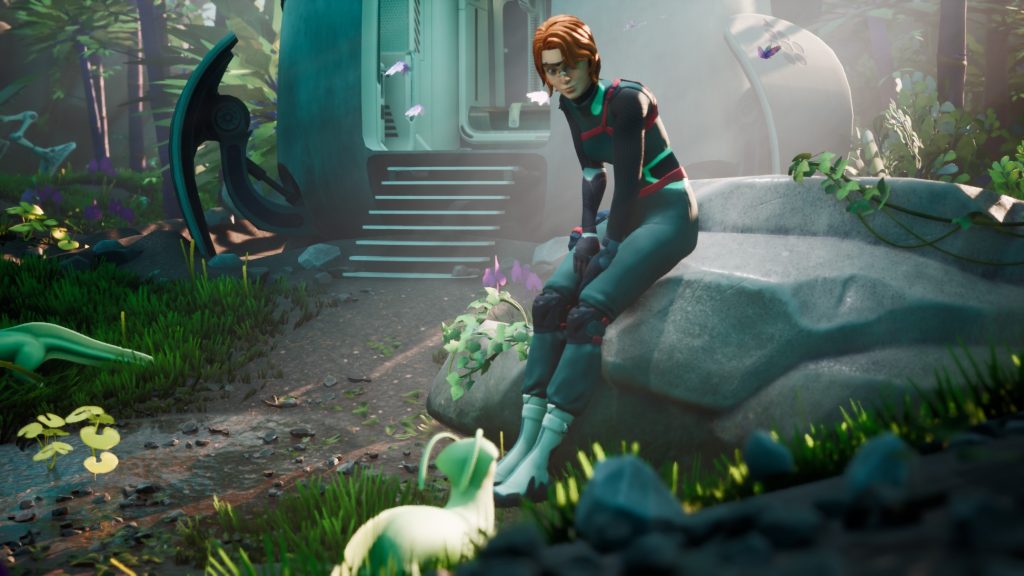
Exploration suffers from a similar tension between expectation and reality. Honeycomb presents itself as a mysterious alien world filled with discovery, yet progression is heavily guided through quest objectives and structured unlock requirements. Advancement is often tied to completing specific tasks rather than rewarding independent experimentation or player driven exploration. Rather than functioning as a true sandbox, the game occupies a more linear space between exploration adventure and narrative survival game.
This structured approach contributes directly to one of the game’s most frequently cited issues: pacing. Early progression provides a steady cadence of discoveries, unlocks, and experimentation. As the game moves forward, however, resource gathering requirements become increasingly pronounced.
Research tasks, collection objectives, and progression gates begin to stretch the time between meaningful discoveries, creating a sense that forward momentum is slowing rather than accelerating. The issue is not that progression stops, but rather that the ratio between effort and reward becomes increasingly uneven.
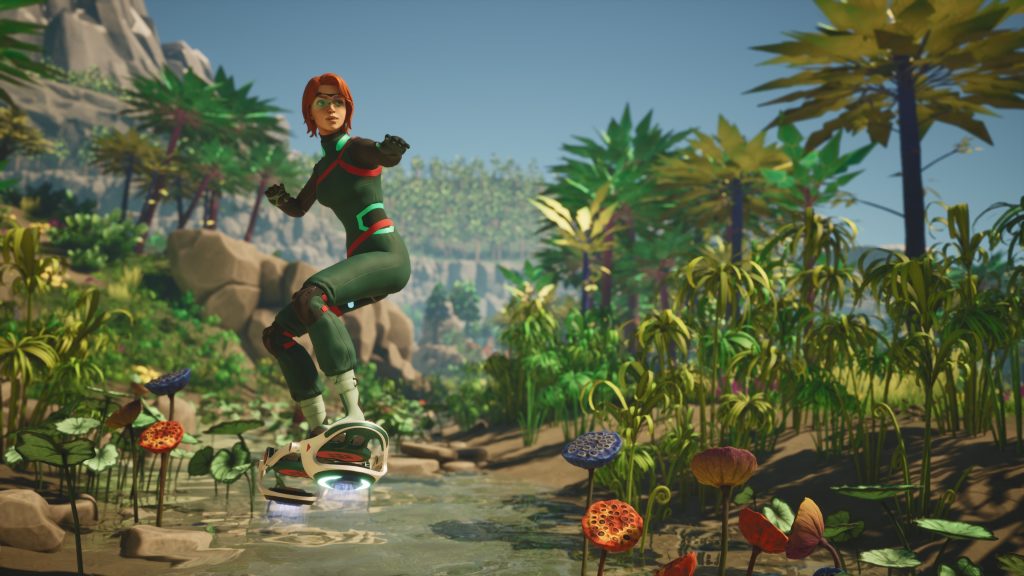
The game’s building system illustrates a broader pattern present throughout Honeycomb’s design. Base construction is functional and serves its intended purpose, but it rarely emerges as a standout feature. Players accustomed to the architectural freedom found in genre leaders such as Valheim, Enshrouded, or Grounded may view Honeycomb’s construction mechanics as serviceable rather than exceptional. Similar observations can be made regarding harvesting, which largely consists of straightforward interaction loops that prioritize accessibility over mechanical depth.
Combat is intentionally de-emphasized. Hostile creatures exist, but the primary tools available focus more on containment and survival than direct confrontation. This design choice is consistent with the game’s scientific themes, although players expecting a more combat oriented survival experience may perceive the available options as restrictive. Whether this represents a weakness or a strength depends largely on the player’s expectations entering the game.

Technical stability represents another area where ambition and execution occasionally diverge. Community discussions following release documented numerous issues ranging from bugs and progression blockers to interface frustrations and balance concerns. Developer responsiveness appears to have been reasonably strong, with multiple fixes arriving shortly after launch, but the volume of reported issues contributed to a perception among some players that Honeycomb launched before all of its systems had reached full maturity.
Perhaps the most significant criticism centers on the conclusion itself. Throughout the adventure, the narrative repeatedly builds anticipation surrounding the world’s mysteries and the civilizations connected to them. As a result, player expectations naturally escalate toward a substantial final revelation. For a noticeable portion of the community, the ending failed to provide a payoff proportionate to that buildup.
The issue is not necessarily that the ending lacks narrative closure, but that the journey appears to promise discoveries whose resolution feels comparatively modest. In a game built upon curiosity and wonder, the strength of the final reveal carries disproportionate weight, making any perceived shortfall particularly noticeable.
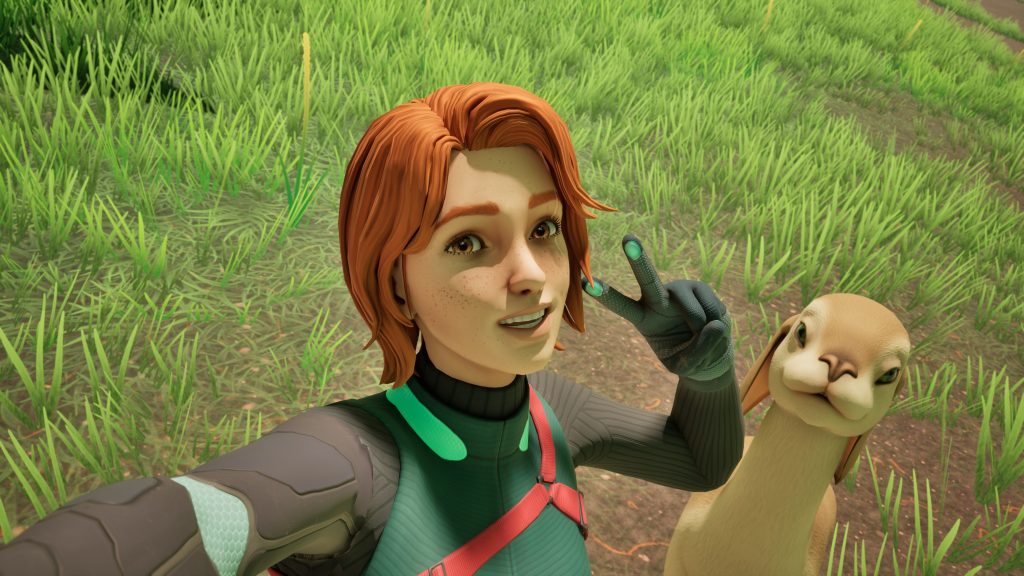
Taken together, these issues do not suggest a fundamentally broken game. Rather, they point toward a project whose imagination often exceeds the depth of its implementation. Honeycomb succeeds in establishing a distinctive scientific identity and delivers a survival experience unlike most of its contemporaries.
At the same time, questions surrounding pacing, progression structure, system depth, technical polish, and narrative payoff prevent the game from fully realizing the considerable potential embedded within its core premise.
Rating 1 out of 5 Thumbs: 👍survival crafting genre with a very dissapointing ending.
( as a cozy no stress 16 hour adventure👍👍..)