



Newsletter Subscribe
Enter your email address below and subscribe to our newsletter

Rising Above the Noise

 Byocta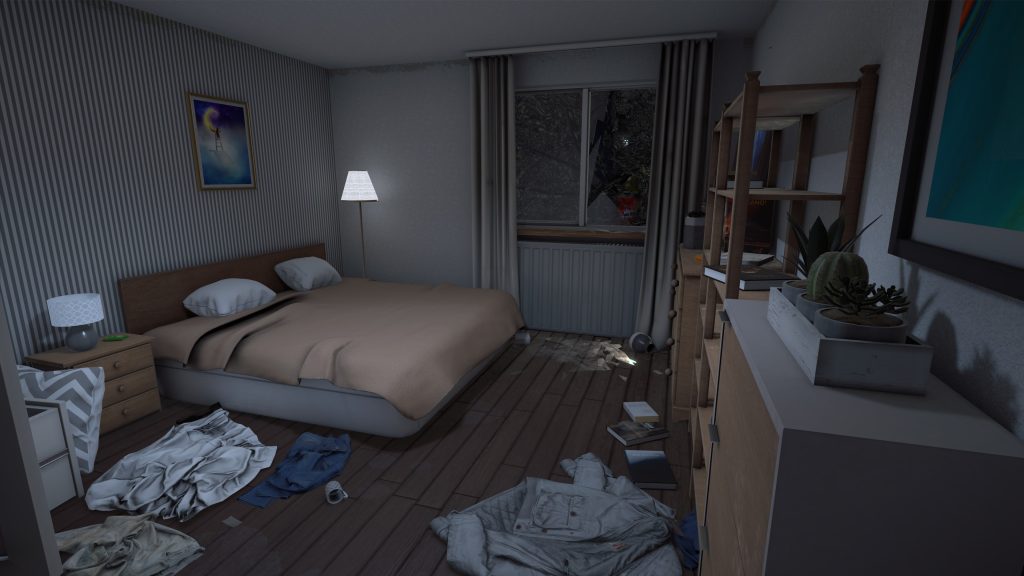
Forensics: Crime Scene Detective positions itself as a simulation that rejects the contemporary trend toward guided detective play. Modern investigative software frequently replaces deductive reasoning with luminous breadcrumbs, automated contextual prompts, and omnipresent interface scaffolding. This title instead constructs a system in which procedural rigor is the sole navigational instrument. The player assumes the role of a forensic specialist whose authority begins only after the sirens fade and the crime scene settles into silence. Apartments, bars, and basements become controlled environments for empirical inquiry rather than theatrical backdrops for narrative spectacle.
The alpha build demonstrates a design ethos that privileges unassisted cognition. No ambient highlighting exists. No contextual nudges appear. Progress depends entirely on the player’s capacity to catalogue specimens, operate analytical machinery, and synthesize empirical findings without algorithmic intervention. The absence of artificial guidance produces a cerebral rhythm that mirrors real forensic practice. A subtle fingerprint on a wine glass, a deleted message on a smartphone, or a microscopic blood spatter becomes a decisive variable rather than a decorative clue. The game’s mechanical friction is intentional. It is the friction of authentic forensic work rather than the friction of poor interface design.
The laboratory phase reinforces this commitment to procedural authenticity. Evidence is not a collectible. It is a narrative substrate that must be interrogated through DNA profiling, ballistic reconstruction, and digital forensics. The player determines whether a scene reflects murder, accident, self defense, or deliberate staging. The game’s partnership with experts from the State Criminal Police Office Rhineland Palatinate provides a methodological backbone that is evident in every interaction. The cases are sober, logical, and resistant to dramatic embellishment. They reward precision and punish inattentiveness. Overlooked evidence does not merely reduce a score. It leaves a case unresolved.
The simulation therefore occupies a niche that few contemporary titles attempt. It is not a detective fantasy. It is a procedural instrument. Its structural friction is not a barrier but a pedagogical device that forces the player to inhabit the cognitive posture of a forensic analyst. The result is a rare example of investigative software that treats truth as an emergent property of disciplined observation rather than a narrative endpoint.
Forensics: Crime Scene Detective
Rating 2 out of 5 Thumbs: 👍 👍 (Law and Order types will find this enjoyable.)