


Newsletter Subscribe
Enter your email address below and subscribe to our newsletter

Rising Above the Noise

 Byocta
Unreal Engine Five has become the most influential real time rendering framework in contemporary digital production. Although its name is often invoked in discussions of blockbuster games or cinematic virtual sets, the engine itself is a constellation of interlocking technologies that collectively redefine how interactive worlds are authored, rendered, and streamed. As Fortnite evolves into a universal runtime environment capable of hosting heterogeneously authored content, Unreal Engine Five stands at the center of this transformation. A clear understanding of its architecture is essential for grasping the magnitude of the industry shift now underway.
Unreal Engine Five is built upon a philosophy of photorealistic fidelity combined with unprecedented scalability. At its core lies Nanite, a virtualized geometry system that allows artists to import film grade assets directly into real time environments. Traditional engines require aggressive optimization, manual polygon reduction, and extensive baking processes. Nanite eliminates these constraints by streaming only the visible fragments of an object at any given moment. This permits the use of models with millions of polygons without overwhelming hardware. The result is a level of geometric richness that previously belonged exclusively to offline rendering.
Complementing Nanite is Lumen, a fully dynamic global illumination system that simulates the behavior of light with remarkable accuracy. Historically, real time engines relied on precomputed lighting solutions that limited creative flexibility and required lengthy baking cycles. Lumen replaces these static methods with a real time illumination model that responds instantly to environmental changes. Light bounces, reflections, and indirect illumination behave as they would in a physically simulated space. This allows creators to iterate rapidly and produce environments that feel alive rather than staged.
Unreal Engine Five also introduces World Partition, a system that reimagines how large scale environments are organized. Instead of dividing worlds into discrete levels or manually managed streaming zones, World Partition automatically segments the environment into a grid and streams only the necessary cells. This enables the creation of expansive open worlds without the traditional overhead of level management. For developers building persistent universes or shared digital spaces, this system provides a foundation for seamless exploration.
The engine’s animation framework has undergone a similar transformation. Control Rig and Sequencer allow creators to animate characters directly within the engine using procedural tools and cinematic timelines. This eliminates the need for external animation software in many workflows and enables rapid iteration. The MetaHuman framework extends this capability by providing highly realistic human models with detailed facial rigs and lifelike proportions. These tools have become central to virtual production pipelines in film and television, where Unreal Engine Five now serves as a real time backdrop for live action shoots.
Networking and replication have also been refined. Unreal Engine Five supports high fidelity multiplayer experiences through an architecture designed for scalability. Its replication system manages state changes across clients with precision, ensuring that complex interactions remain synchronized even in large player counts. This is essential for the persistent environments that define modern online experiences and is foundational to Fortnite’s evolution into a universal runtime environment.
The engine’s scripting ecosystem has expanded as well. Traditional development relied heavily on C plus plus, a powerful but complex language. Unreal Engine Five introduces Verse, a new language designed for high level logic, reactive programming, and dynamic world manipulation. Verse is intended to serve as the connective tissue between user generated content and the underlying engine. It allows creators to build sophisticated behaviors without deep knowledge of low level programming. Although Verse is still evolving, it represents Epic’s attempt to unify professional development and creator driven experimentation under a single linguistic framework.
Performance optimization is another pillar of the engine. Temporal Super Resolution provides high quality upscaling that preserves detail while reducing rendering load. Virtual Shadow Maps deliver precise shadowing without the artifacts common in older techniques. The engine’s hardware abstraction layer ensures that these features scale across platforms, from high end PCs to consoles and mobile devices. This cross platform consistency is essential for any engine that aspires to serve as the foundation for a universal runtime environment.
Unreal Engine Five also integrates deeply with virtual production workflows. Its real time rendering capabilities allow filmmakers to shoot scenes against digital environments displayed on large LED volumes. These environments respond dynamically to camera movement, creating realistic parallax and lighting effects. This technique has become a staple of modern film production, reducing the need for location shoots and enabling directors to visualize scenes with unprecedented immediacy.
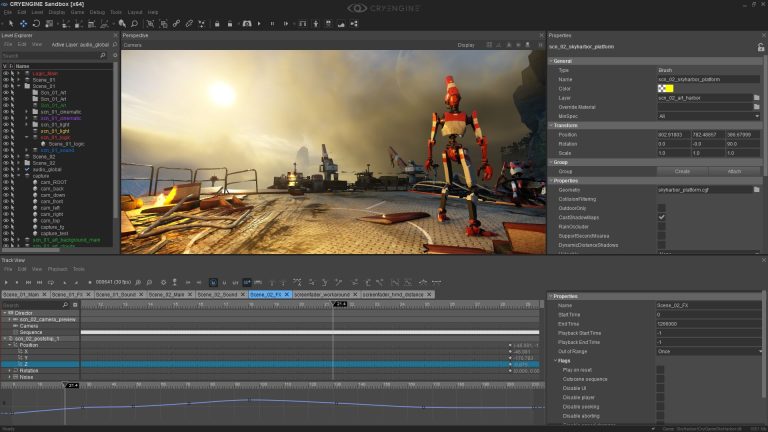
The engine’s editor has been redesigned to support these advanced workflows. Its interface provides real time previews, node based material editing, and integrated debugging tools. The editor is built to accommodate both professional studios and independent creators, offering a spectrum of tools that scale with project complexity. This accessibility is central to Epic’s strategy of democratizing high fidelity creation.
Understanding these features is essential for contextualizing the recent alliance between Epic and Unity. Unreal Engine Five is not merely a rendering framework. It is a comprehensive operating environment for digital creation. Its geometry system, lighting model, world partitioning, animation tools, scripting languages, and virtual production capabilities form a unified architecture that supports both professional and creator driven content. When Fortnite adopts the role of a universal runtime environment, it inherits the full power of Unreal Engine Five as its underlying substrate.
The integration of Unity authored content into this environment does not diminish the significance of Unreal Engine Five. Instead, it highlights the engine’s maturity. Fortnite can host external runtimes precisely because Unreal Engine Five provides a stable, scalable, and highly performant foundation. The engine’s features allow it to serve as the invisible infrastructure beneath a sovereign digital territory. Unity projects may enter the ecosystem, but Unreal Engine Five remains the architectural bedrock.
As the industry moves toward a future defined by persistent digital environments, cross platform commerce, and heterogeneously authored content, Unreal Engine Five stands as one of the most consequential technologies of the era. Its features are not isolated innovations. They are components of a larger vision in which engines become invisible and platforms become sovereign. Understanding this engine is essential for understanding the transformation of Fortnite and the broader realignment of interactive media.
The Full Technological Architecture of Unreal Engine Five
Unreal Engine Five represents the most ambitious real time creation framework ever released by Epic Games. It is not a singular tool but an integrated constellation of systems that collectively redefine how digital environments are authored, rendered, animated, and streamed. Its architecture is designed to collapse the traditional boundaries between film grade assets, interactive worlds, and virtual production. Understanding its full technological breadth is essential for grasping why Fortnite can now function as a universal runtime environment capable of hosting heterogeneously authored content.
At the foundation of Unreal Engine Five lies Nanite, a virtualized geometry system that allows creators to import film grade assets directly into real time environments. Historically, engines required aggressive optimization, manual polygon reduction, and extensive baking processes. Nanite eliminates these constraints by streaming only the visible fragments of an object at any given moment. This permits the use of models with millions of polygons without overwhelming hardware. The result is a level of geometric richness that previously belonged exclusively to offline rendering. Nanite is not merely a performance innovation. It is a philosophical shift that treats real time rendering as a domain capable of cinematic fidelity.
Complementing Nanite is Lumen, a fully dynamic global illumination system that simulates the behavior of light with remarkable accuracy. Traditional engines relied on precomputed lighting solutions that limited creative flexibility and required lengthy baking cycles. Lumen replaces these static methods with a real time illumination model that responds instantly to environmental changes. Light bounces, reflections, and indirect illumination behave as they would in a physically simulated space. This allows creators to iterate rapidly and produce environments that feel alive rather than staged. Lumen is the engine’s answer to the long standing divide between real time and offline lighting.
Unreal Engine Five also introduces World Partition, a system that reimagines how large scale environments are organized. Instead of dividing worlds into discrete levels or manually managed streaming zones, World Partition automatically segments the environment into a grid and streams only the necessary cells. This enables the creation of expansive open worlds without the traditional overhead of level management. For developers building persistent universes or shared digital spaces, this system provides a foundation for seamless exploration. World Partition is the structural backbone that allows Fortnite to operate as a continuous environment rather than a collection of isolated maps.
The engine’s animation framework has undergone a similar transformation. Control Rig and Sequencer allow creators to animate characters directly within the engine using procedural tools and cinematic timelines. This eliminates the need for external animation software in many workflows and enables rapid iteration. The MetaHuman framework extends this capability by providing highly realistic human models with detailed facial rigs and lifelike proportions. These tools have become central to virtual production pipelines in film and television, where Unreal Engine Five now serves as a real time backdrop for live action shoots. The engine’s animation ecosystem is designed to collapse the distance between cinematic production and interactive media.
Networking and replication have also been refined. Unreal Engine Five supports high fidelity multiplayer experiences through an architecture designed for scalability. Its replication system manages state changes across clients with precision, ensuring that complex interactions remain synchronized even in large player counts. This is essential for the persistent environments that define modern online experiences and is foundational to Fortnite’s evolution into a universal runtime environment. The engine’s networking model is built to support both traditional multiplayer games and emerging forms of shared digital presence.
The engine’s scripting ecosystem has expanded as well. Traditional development relied heavily on C plus plus, a powerful but complex language. Unreal Engine Five introduces Verse, a new language designed for high level logic, reactive programming, and dynamic world manipulation. Verse is intended to serve as the connective tissue between user generated content and the underlying engine. It allows creators to build sophisticated behaviors without deep knowledge of low level programming. Although Verse is still evolving, it represents Epic’s attempt to unify professional development and creator driven experimentation under a single linguistic framework. Verse is the language that allows Fortnite to function as a programmable environment rather than a static game.
Performance optimization is another pillar of the engine. Temporal Super Resolution provides high quality upscaling that preserves detail while reducing rendering load. Virtual Shadow Maps deliver precise shadowing without the artifacts common in older techniques. The engine’s hardware abstraction layer ensures that these features scale across platforms, from high end PCs to consoles and mobile devices. This cross platform consistency is essential for any engine that aspires to serve as the foundation for a universal runtime environment. Unreal Engine Five is built to maintain fidelity even under the constraints of consumer hardware.
Unreal Engine Five also integrates deeply with virtual production workflows. Its real time rendering capabilities allow filmmakers to shoot scenes against digital environments displayed on large LED volumes. These environments respond dynamically to camera movement, creating realistic parallax and lighting effects. This technique has become a staple of modern film production, reducing the need for location shoots and enabling directors to visualize scenes with unprecedented immediacy. Unreal Engine Five is not merely a game engine. It is a cinematic toolset.
The engine’s editor has been redesigned to support these advanced workflows. Its interface provides real time previews, node based material editing, and integrated debugging tools. The editor is built to accommodate both professional studios and independent creators, offering a spectrum of tools that scale with project complexity. This accessibility is central to Epic’s strategy of democratizing high fidelity creation. The editor is the command center through which creators access the full power of the engine.
The engine’s audio system has also evolved. Unreal Engine Five includes a spatial audio framework capable of simulating complex acoustic environments. Sound propagation, occlusion, and reverberation behave realistically within three dimensional spaces. This allows creators to build immersive soundscapes that match the visual fidelity of their environments. Audio is treated as a first class component of the engine rather than an afterthought.
Physics simulation is another area of advancement. Chaos, the engine’s physics system, provides high fidelity destruction, rigid body dynamics, cloth simulation, and fluid behavior. These simulations operate in real time and integrate seamlessly with the engine’s rendering and animation systems. Chaos allows creators to build environments that respond dynamically to player interaction and environmental forces.
The engine’s material system is equally sophisticated. Its node based interface allows creators to build complex shaders without writing code. Materials can respond to light, temperature, and environmental conditions. They can simulate subsurface scattering, iridescence, and other advanced optical phenomena. This system is essential for achieving the photorealistic fidelity that defines Unreal Engine Five.
Understanding these features is essential for contextualizing the recent alliance between Epic and Unity. Unreal Engine Five is not merely a rendering framework. It is a comprehensive operating environment for digital creation. Its geometry system, lighting model, world partitioning, animation tools, scripting languages, physics simulations, audio systems, and virtual production capabilities form a unified architecture that supports both professional and creator driven content. When Fortnite adopts the role of a universal runtime environment, it inherits the full power of Unreal Engine Five as its underlying substrate.
The integration of Unity authored content into this environment does not diminish the significance of Unreal Engine Five. Instead, it highlights the engine’s maturity. Fortnite can host external runtimes precisely because Unreal Engine Five provides a stable, scalable, and highly performant foundation. The engine’s features allow it to serve as the invisible infrastructure beneath a sovereign digital territory. Unity projects may enter the ecosystem, but Unreal Engine Five remains the architectural bedrock.
As the industry moves toward a future defined by persistent digital environments, cross platform commerce, and heterogeneously authored content, Unreal Engine Five stands as one of the most consequential technologies of the era. Its features are not isolated innovations. They are components of a larger vision in which engines become invisible and platforms become sovereign. Understanding this engine is essential for understanding the transformation of Fortnite and the broader realignment of interactive media.
Understanding Unreal Engine Five Understanding Unreal Engine Five
Epic Unity: The Metamorphosis of Epic Games – Octavius Reviews


[…] Understanding Unreal Engine Five – Octavius Reviews […]