

Newsletter Subscribe
Enter your email address below and subscribe to our newsletter

Rising Above the Noise

 Byocta
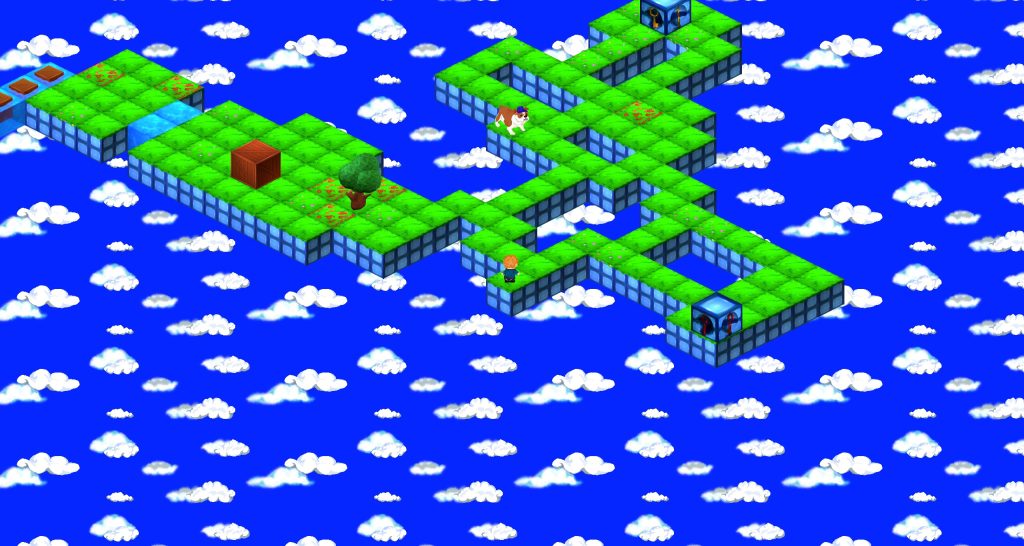
Bryce Tiles is a precision driven grid logic puzzler built on Manhattan geometry and retro PC puzzle design.

Bryce Tiles enters the grid based puzzle genre with a clear sense of identity. It does not attempt to modernize the Sokoban lineage. It does not chase minimalist elegance or emergent rule epiphanies. Instead, it embraces the heritage of early PC puzzle design and builds a contemporary structure around it. The result is a deliberate retro logic experience that understands its audience and delivers a focused and mechanically dense campaign.
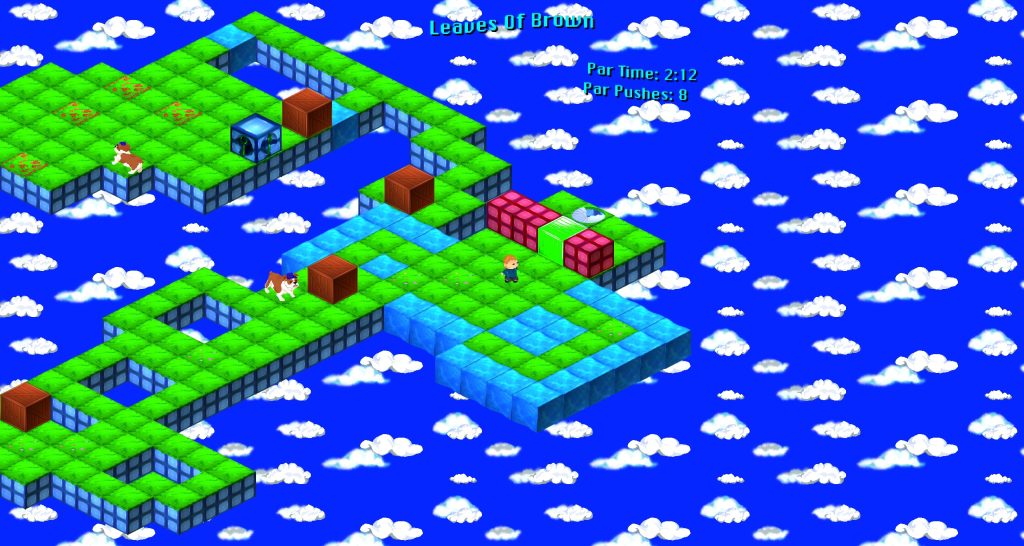
The foundation of Bryce Tiles is its grid geometry. The game uses an isometric Manhattan layout rather than a top down orthographic grid. This choice defines the entire experience. Movement is precise. Pathing is exact. Every tile interaction depends on the player’s ability to read spatial relationships in a taxicab geometry rather than a freeform plane. This creates a puzzle language that rewards planning and punishes improvisation. It is a design philosophy that aligns closely with Sokoban purists and players who enjoy strict spatial reasoning.
The mechanical vocabulary is broad. Bryce Tiles does not rely on a single gimmick. It layers hazards, surfaces, and interactive elements into a cohesive system. Ice tiles introduce frictionless movement. Rapids and water currents create forced directional flow. Laser emitters and mirrors add redirection logic. Push pads alter tile states. Pathfinding enemies introduce timing and positional pressure. These elements are not presented as isolated mechanics. They are combined in ways that require the player to understand how each system interacts with the others. The result is a puzzle structure that demands attention and rewards mastery.
The level count exceeds one hundred thirty stages. The campaign is long enough to establish a clear difficulty curve. Early levels introduce basic interactions. Midgame levels combine hazards and surfaces. Late game levels require full comprehension of the mechanical vocabulary. The pacing is steady. The game does not rely on sudden difficulty spikes. Instead, it builds complexity through layered interactions. This approach respects the player’s time and creates a sense of progression that feels earned rather than imposed.
Bryce Tiles positions itself within a specific aesthetic niche. The visual presentation is a direct homage to late nineties and early 2000 shareware. The tiles have a pre rendered look reminiscent of Chip’s Challenge, Rescue Rover, and Bolo Adventures. The audio design follows the same philosophy. The game does not attempt to modernize its aesthetic. It commits fully to its retro identity. This decision limits its mainstream appeal but strengthens its connection to players who appreciate the era it references.
The game’s difficulty profile is strict. The Manhattan geometry requires exact pathing. The hazards demand careful planning. The enemies introduce timing constraints. The puzzles do not encourage casual experimentation. They require deliberate thought. This makes Bryce Tiles appealing to players who enjoy precision logic. It also creates a barrier for players who prefer trial and error or relaxed puzzle loops. The game does not compromise its identity to broaden its audience. It remains faithful to its design principles.
The community footprint is small but positive. On Steam, Bryce Tiles maintains a one hundred percent positive review profile. This reflects the niche nature of the game. It does not attract a large audience, but it satisfies the players who seek this type of experience. The inclusion of a level editor and Workshop support increases the game’s longevity. Community created content extends the life of the puzzle loop and allows dedicated players to explore new configurations beyond the main campaign. This feature elevates Bryce Tiles above fixed campaign puzzle titles and gives it a long tail presence within its genre.
The game’s strengths are clear. It has a strong mechanical identity. It offers a broad puzzle vocabulary. It delivers a consistent difficulty curve. It commits fully to its retro aesthetic. It provides community tools that extend its lifespan. These qualities place Bryce Tiles in the upper tier of retro Sokoban descendants. It is not a genre leader, but it is a genre specialist. It understands what it wants to be and executes that vision with competence and clarity.
The weaknesses are equally clear. The retro aesthetic limits its appeal to players who prefer modern minimalist design. The strict difficulty curve creates a barrier for casual puzzle players. The game does not introduce a signature mechanic that redefines the genre. It does not pursue emergent rule interactions. It does not attempt to innovate beyond its heritage. These limitations prevent Bryce Tiles from reaching the broader audience that modern puzzle titles attract.
Within the Sokoban and grid logic puzzle genre, Bryce Tiles occupies a high competence retro niche. It is a mechanically dense puzzle experience that rewards precision and planning. It is a deliberate homage to early PC puzzle design. It is a focused product that delivers exactly what it promises. It is not a reinvention of the genre. It is a refinement of a specific lineage within it.
Final Score a solid: 4 thumbs out of 5 👍👍👍👍 (Sokoban Bryce Tiles earns a rating of 4 thumbs out of five within its genre. It stands as a strong entry in the retro logic puzzle space. It offers depth, challenge, and clarity. It respects its heritage and builds upon it. It is a game for players who appreciate exact movement, layered hazards, and structured spatial reasoning.)
Review Note:
The ratings breakdown. Normally Octavius Reviews would not give four thumbs to a cozy game. This is because we feel that low stakes genres have a tendency to fall within a predictable level of quality that does not truly challenge a player in the same way that an ambitious title would. Under normal circumstances we would say that in order to earn four thumbs from us a game would need to redefine its genre. However, Bryce Tiles fits inside a niche puzzler group with deep retro roots. It comes from a group of titles that are not made as often, and you could argue that Bryce Tiles is a unique game.
With that said, we went deeper into it than we normally would. We graded Bryce Tiles as we would any five thumb title to see how it would measure up. Based on a larger metric sampling pool, the game scored higher than the average title in its genre, and we felt that to be fair we needed to represent it correctly. We respect the passion project vibe, and we hope that anyone who plays this game will see that passion reflected in its design.
Within the broader landscape of the Sokoban and grid based puzzle genre, Bryce Tiles occupies a deliberate retro niche. Its rating and positioning among puzzle enthusiasts rely on how effectively it balances nostalgia with puzzle design.
Genre Standings and Comparative Metrics
The Steam Workshop for Bryce Tiles
Bryce Tiles GOG Dreamlist | GOG.COM
Buy Bryce Tiles from the Humble Store