


Newsletter Subscribe
Enter your email address below and subscribe to our newsletter

Rising Above the Noise
 Byocta
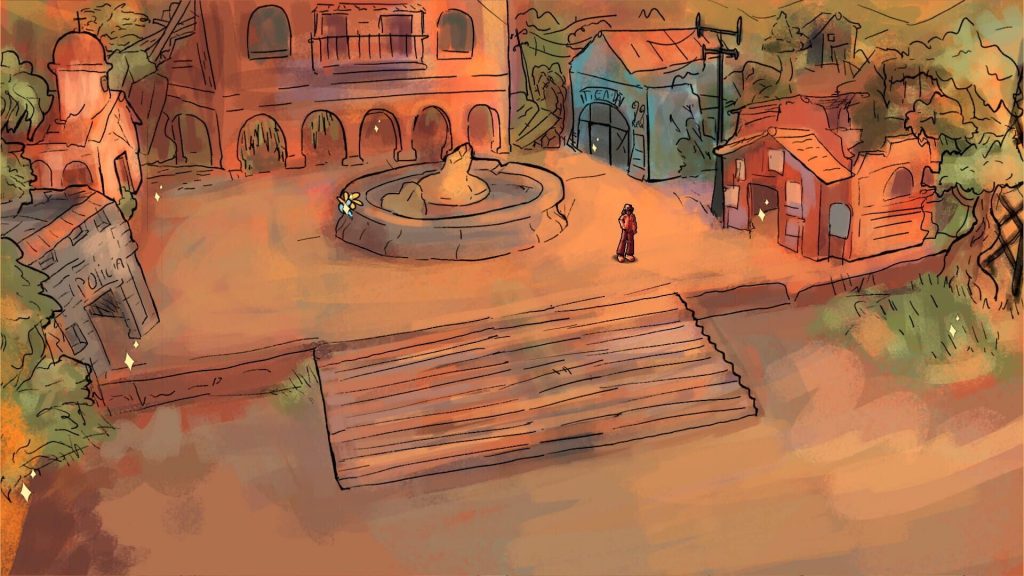
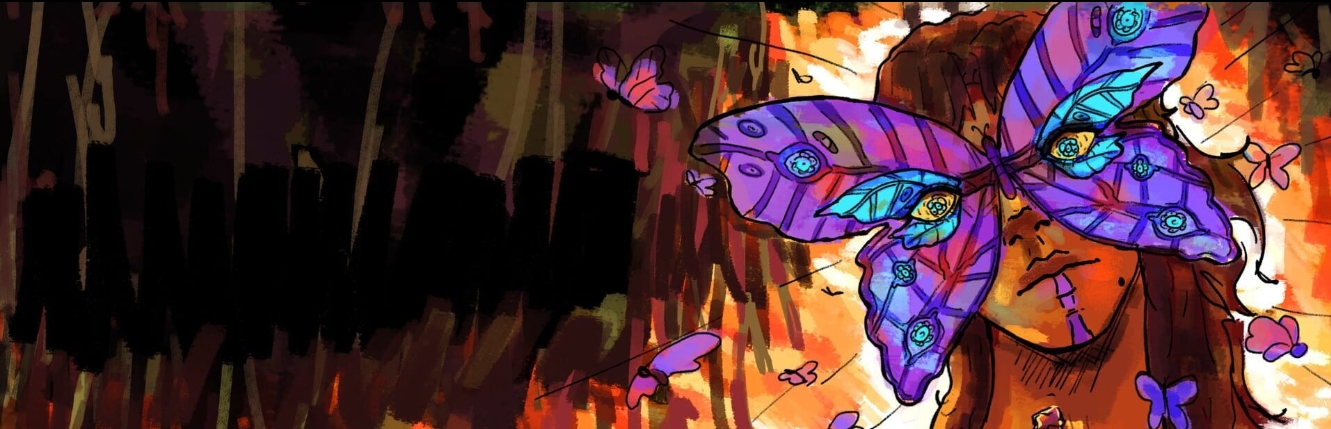
The heavy boots of investigator Nayla Rivera crunch against the brittle cinders of Cerro Milagroso, a desolate company town in nineteen sixty eight where seven hundred souls vanished into thin air without leaving a single trace behind. Official documentation from the conglomerate offers a convenient and sanitized fabrication, blaming a sudden industrial fire for the utter erasure of a community, but the ash tells a far more complicated story.
Stepping into the ruins, Nayla opens an expansive journal that immediately transforms into an intricate web of portraits, memories, and centuries of forgotten history. Every photograph and recovered fragment represents a human life swallowed by time, demanding absolute forensic patience from anyone brave enough to untangle the generational curses and corporate atrocities buried beneath the soil.
RELEASE DATE:13 Jan, 2026
The central question posed in the working conclusion is ultimately answered in the game’s favor. While Funeral for the Sun presents an enormous chronological scope spanning centuries of political upheaval, the investigative framework consistently maintains logical cohesion through the interaction between memory exploration, environmental observation, and journal-based deduction.
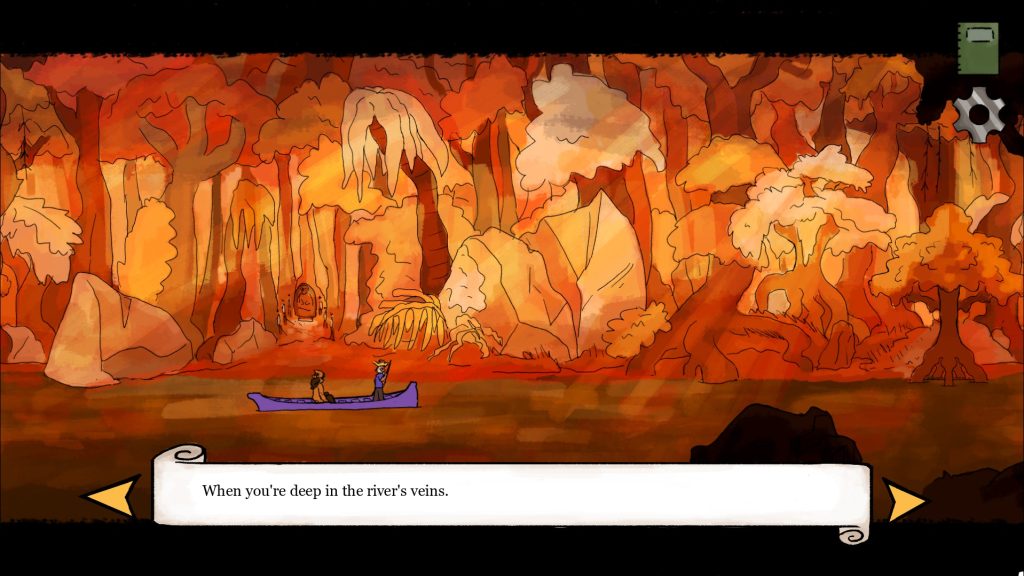
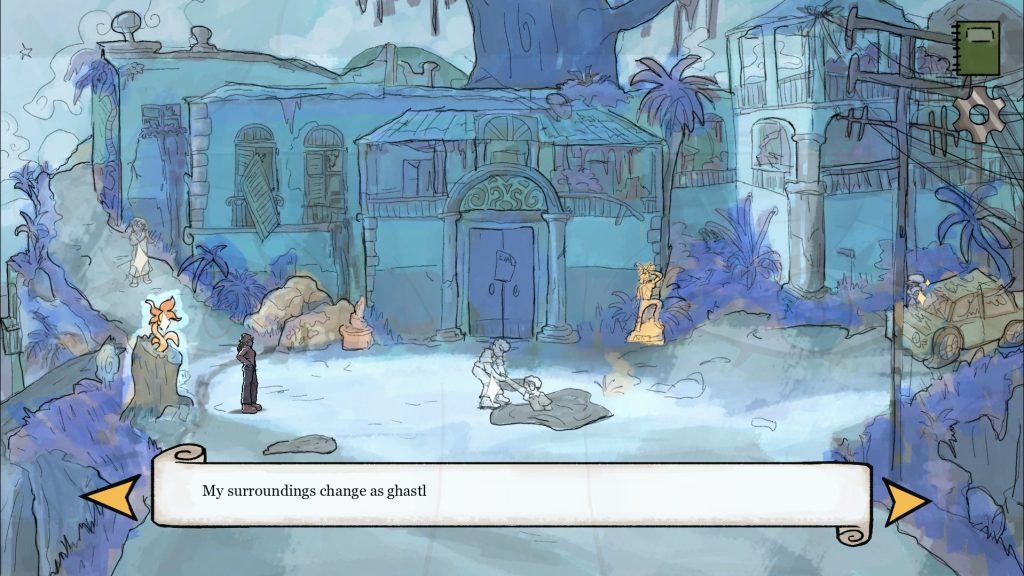
Investigation unfolds across two interconnected layers. In the present, players explore the abandoned remains of Cerro Milagroso, examining objects, locations, and surviving traces of human activity. Through the use of magical blue flowers scattered throughout the environment, these spaces can be transformed into preserved memories of past events. This mechanic allows players to move between present reality and historical recollection, gradually reconstructing the town’s collective history through dozens of interconnected scenes.
The memory system serves as the foundation of the game’s narrative delivery. Key events are presented through voiced dialogue sequences that can be reviewed at any time after discovery, ensuring important information remains accessible without undermining the investigative process. Rather than overwhelming players with disconnected lore, the structure encourages careful observation of characters, locations, documents, and conversations before recording conclusions within the game’s journal system.
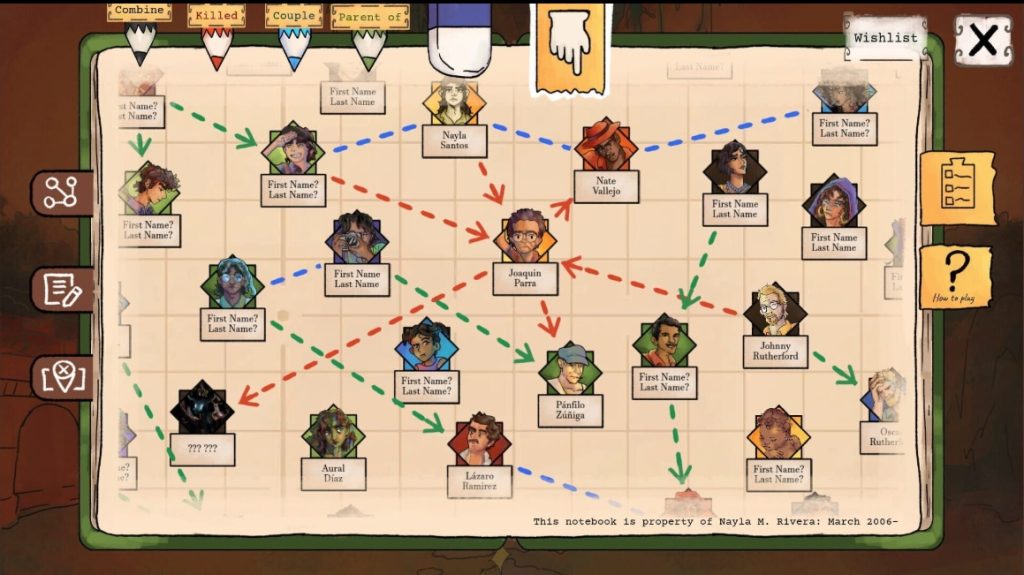
This journal functions as both notebook and investigative board. As new evidence is discovered, players catalog information, identify individuals, establish relationships, and draw connections between people and events. The gradual construction of this network transforms what initially appears to be an impossible web of names and faces into an increasingly coherent historical record. By allowing players to visualize relationships and organize evidence themselves, the game preserves the satisfaction of genuine deduction while providing enough structure to prevent the mystery from collapsing under its own complexity.
The sole significant source of friction stems from progression requirements. Advancement is frequently tied to updating journal entries, recording discoveries, and reviewing newly acquired evidence. Players cannot simply uncover information; they must actively process and document it through the systems provided. While this occasionally feels restrictive, particularly when the next objective is apparent before the journal recognizes it, the requirement reinforces the game’s emphasis on careful attention and methodical investigation. Success depends not merely on noticing clues but on demonstrating an understanding of how those clues fit within the broader narrative.
What elevates this structure beyond a conventional puzzle game is the quality of the writing. The historical mystery remains consistently engaging because each revelation deepens both personal and political dimensions of the narrative. As identities, families, alliances, and tragedies become clearer, the player is not merely solving a puzzle but reconstructing the memory of an entire community. The result is a mystery that rewards patience with a steadily expanding understanding of the forces that shaped Cerro Milagroso across generations.
Rating 3 out of 5 Thumbs: 👍 👍👍(Very Good Mystery)
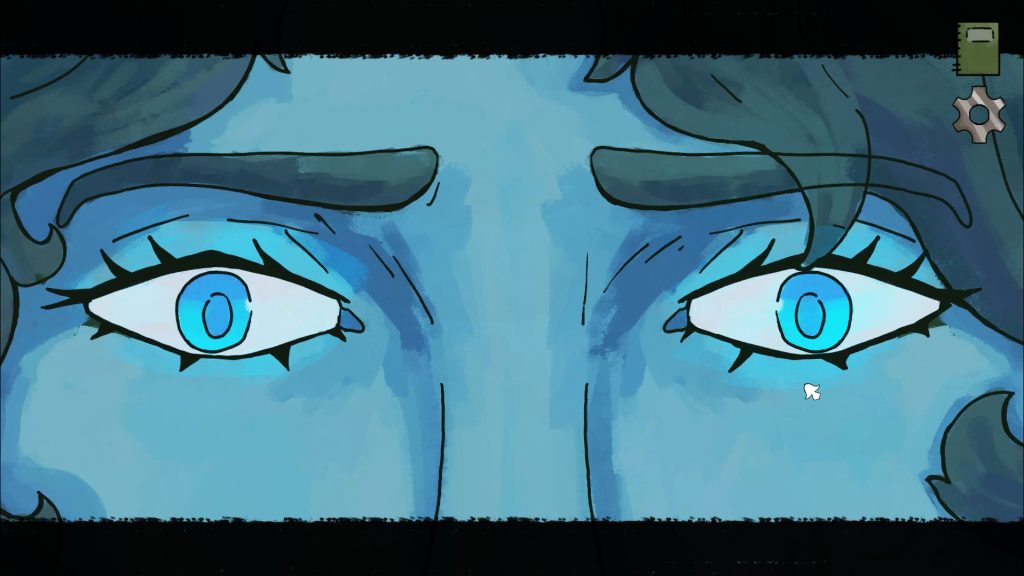
Complementing this narrative strength is the game’s striking visual presentation. Funeral for the Sun employs a dreamlike watercolor aesthetic that gives both the present-day ruins and historical memories a distinct sense of fragility and impermanence. Hand-drawn environments, combined with selective animation, create scenes that feel caught between memory and reality, reinforcing the themes of remembrance, loss, and historical preservation. The artistic direction not only distinguishes the game visually but also strengthens the emotional atmosphere surrounding its investigative framework.
Ultimately, Funeral for the Sun delivers on the promises established by its premise. The extensive cast of characters and centuries-spanning timeline never lose narrative coherence because the memory system, journal mechanics, and environmental storytelling work together to guide understanding without sacrificing the pleasure of discovery. Its greatest achievements emerge not from challenge alone but from its ability to transform historical reconstruction into an engaging and emotionally resonant act of investigation.
The expansive chronological scope does maintain logical cohesion. Although the volume of characters, memories, and historical information initially appears daunting, the journal system, relationship mapping tools, memory replay features, and carefully structured narrative progression provide sufficient organization to keep the mystery comprehensible. The challenge arises from the density of information rather than narrative confusion. Players willing to engage attentively with the evidence will find that the game’s systems successfully support its ambitious historical scope rather than being overwhelmed by it.