



Newsletter Subscribe
Enter your email address below and subscribe to our newsletter

Rising Above the Noise

 Byocta
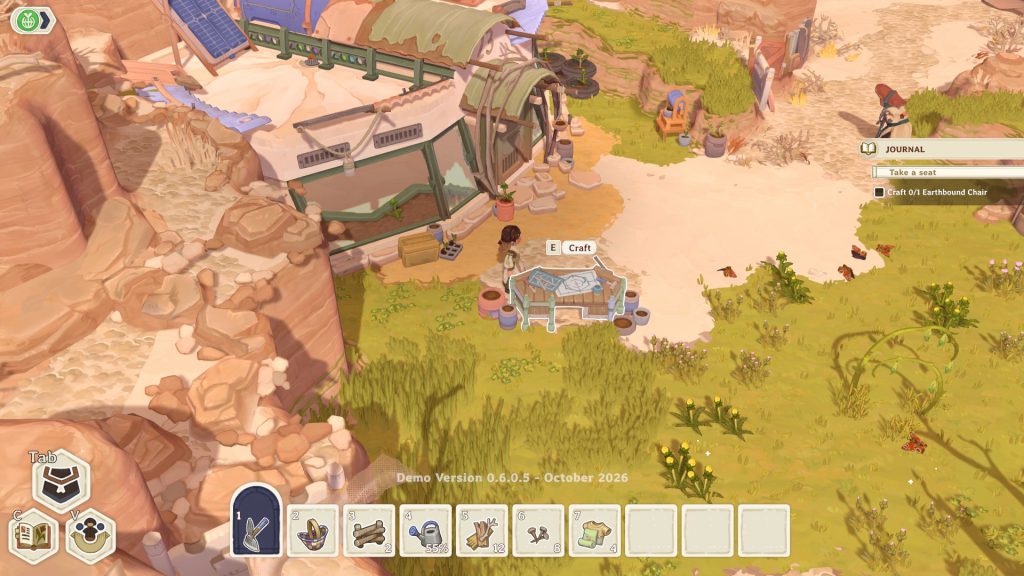
The contemporary simulation landscape frequently relies on frameworks built around extraction, expansion, and profit. Positive Impact Games’ The Regreening proposes a fundamentally different premise through its soilpunk identity, placing environmental recovery at the center of player interaction.
Rather than transforming natural spaces into productive assets, players are tasked with restoring damaged ecosystems and rebuilding biodiversity across a degraded landscape.
Planned Release Date: 7 Dec, 2026
The most significant feature of The Regreening is its rejection of conventional economic progression. Monetary accumulation, debt management, harvest schedules, and productivity quotas are absent from the core loop. In their place, progression is tied directly to ecological restoration, with advancement unlocked through the successful rehabilitation of natural environments.
Player decision-making focuses on habitat design, species placement, and biome recovery. Native plants are cultivated to encourage biodiversity, while discarded materials are repurposed into useful tools and structures through upcycling systems. The resulting gameplay emphasizes environmental planning rather than financial optimization.
This framework is reinforced by the game’s atmosphere. Adaptive soundscapes, nature spirits, and the visual transformation of recovering landscapes support a contemplative experience built around stewardship rather than ownership. The player’s role is not to dominate the environment but to participate in its recovery.
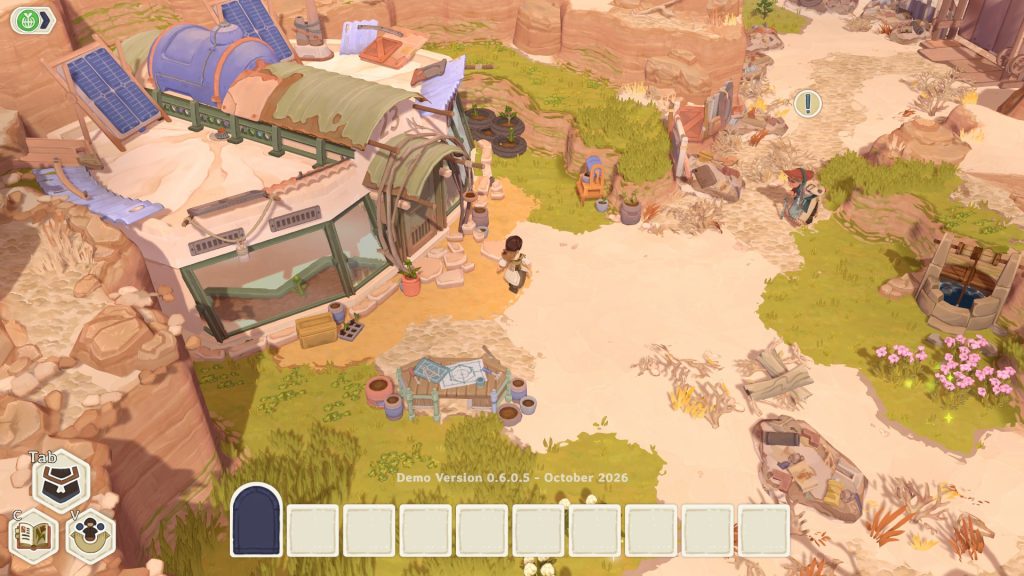
The primary uncertainty lies in long-term engagement. Because the game’s progression is rooted in restoration, its success will depend on whether new ecological challenges continue to emerge as ecosystems mature. Without sufficient systemic depth, the restorative loop risks reaching a plateau once major regions have been reclaimed.
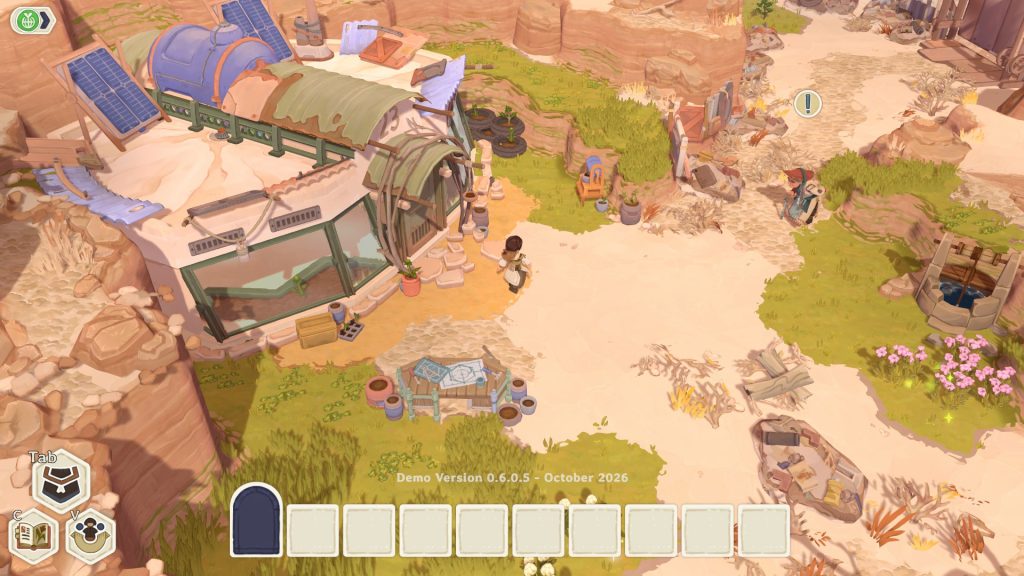
Compared to genre leaders such as Stardew Valley and Animal Crossing, The Regreening operates from a different motivational structure. Those games rely heavily on economic growth, collection systems, and personal expansion. The Regreening instead uses environmental improvement as the principal source of progression and reward.
This positions the project within a smaller niche of environmentally focused simulation games while retaining the accessibility associated with cozy game design. Its identity is defined less by farming and more by ecosystem management.
The Regreening enters the genre with a clear and distinctive vision. Its soilpunk framework replaces extraction with restoration and economic growth with ecological recovery. The concept is compelling, but its ultimate standing will depend on whether environmental stewardship can sustain player engagement over extended play sessions. Until that question is answered through full evaluation, the project remains one of the more promising conceptual experiments currently emerging within the cozy simulation space.
Rating 2 out of 5 Thumbs: 👍 👍(So cozy it cured my insomnia)