

Newsletter Subscribe
Enter your email address below and subscribe to our newsletter

Rising Above the Noise

 Byocta
Mixtape presents itself as a coming of age story, but its real function is architectural. It constructs an emotional environment rather than a narrative. It arranges cultural fragments with the precision of a designer who understands that nostalgia is no longer a personal recollection but a shared aesthetic language. The game does not attempt to recreate adolescence as it was lived. It recreates adolescence as it has been remembered, retold, and stylised across decades of film, music, and cultural shorthand. It is a curated memory rather than an autobiographical one.
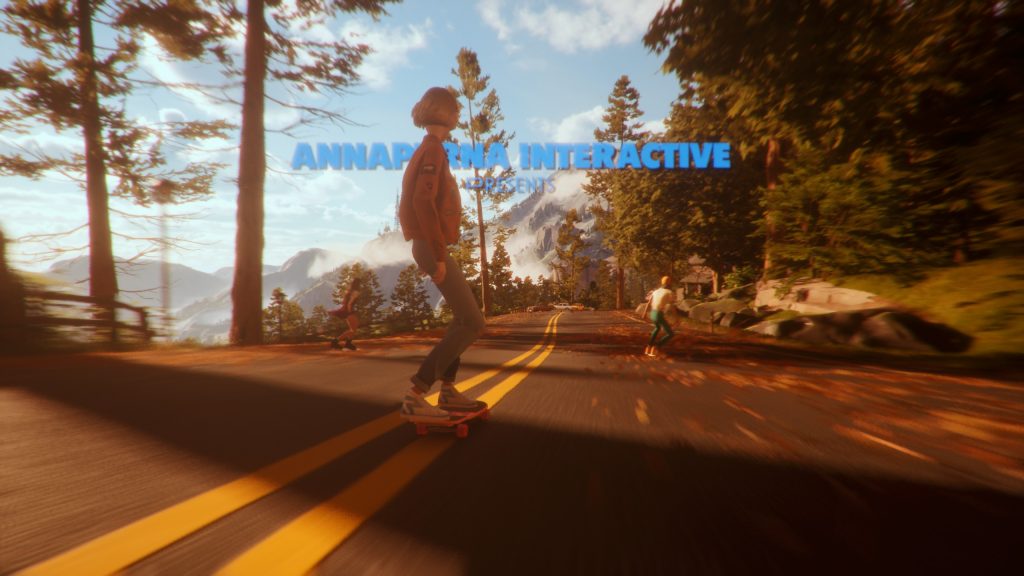
This distinction becomes more significant when placed against the critical response from major outlets. Mixtape has been celebrated with perfect scores that focus almost entirely on its cinematics, its soundtrack, and its mood. The praise is directed at the presentation rather than the experience of playing the game. This reflects a broader shift in the industry. Large brands increasingly evaluate games as if they were film trailers. They reward sentiment, polish, and aesthetic coherence while ignoring the mechanical structure that defines the medium. Mixtape benefits from this shift. It is a work built for screenshots and reaction clips. It is a game that performs well in a marketing cycle.

The problem is not that Mixtape lacks value. The problem is that the critical framework used by major outlets no longer measures the qualities that matter to players who expect interactivity, agency, and replayability. A ten out of ten implies mastery of the medium. It implies a work that understands the strengths of games as games. Mixtape is not that. It is a playable montage. It is a memory reconstruction delivered with confidence and style, but it is not a mechanically rich experience. The perfect scores reveal more about the priorities of the reviewers than about the game itself.
Mixtape succeeds on its own terms. It constructs an emotional environment with precision. It offers a universalised version of adolescence that resonates even when the player recognises the artifice. The lighting, the music, the framing, and the pacing all work together to evoke a memory that feels shared even when it is not. The game is confident in its construction. It knows that the emotional impact does not depend on historical accuracy. It depends on resonance. But the industry response exposes a deeper issue. Critics have begun to treat sentiment as substance. They reward the feeling of a game rather than the function of it. They elevate presentation over design.
This is the quiet truth beneath Mixtape. It is not a story about youth. It is a story about the desire to feel connected to a version of youth that has been shaped by decades of cultural repetition. It is a reconstruction of a reconstruction. It is a reminder that the past we long for is often a past we never lived. Mixtape understands this and builds its world accordingly. It offers a memory that is both familiar and unattainable. It invites the player to step inside and recognise themselves in a place that never belonged to them. That is its strength and its contradiction. It is a beautifully crafted emotional echo, but it is not the masterpiece that the perfect scores suggest. The ten out of ten reviews reveal a critical landscape that now rewards sentiment over structure and presentation over play. They celebrate the mood of a game rather than the medium it belongs to. They treat cinematics as proof of excellence and overlook the absence of mechanical depth, interactivity, and replay value. The result is a form of criticism that flatters the marketing cycle rather than serving the player. Mixtape becomes the beneficiary of this drift, but it also exposes it. The praise says less about the game and more about how far the standards have fallen.
Rating 2 out of 5 Thumbs: 👍 👍 (for X Gen Nostalgia Cinema, But as a game?) 👎Boring! and 90%Hype!