



Newsletter Subscribe
Enter your email address below and subscribe to our newsletter

Rising Above the Noise
 Byocta
Inheritance simulators often begin with a gift and end with a spreadsheet. The premise of Grandma Left Me A Building positions itself within the comfortable management tradition, but introduces a playful twist by shifting the primary challenge from pure economic expansion to managing the social chemistry of a wildly eclectic tenant roster.
Restoring a dilapidated inheritance while sorting out who gets to live next to whom creates an immediate visual and mechanical pull, inviting players to step into the role of a patient caretaker rather than a ruthless landlord.
Planned Release Date: 13 Nov, 2026
Your primary interaction with the play space revolves around a gentle, rhythmic balancing act that prioritizes comfort over high stakes pressure. Balancing building overhead, fulfilling individual tenant requests, and deciding who is actually worth renting to forms a surprisingly peaceful daily routine.
Without aggressive fail states, bankruptcy timers, or complex financial barriers pushing back against your choices, the title intentionally strips away the anxiety that typically defines the management genre.

The true appeal of the experience stems entirely from placing an unlikely pair of neighbors side by side, watching their daily interactions unfold, and allowing the building to quietly hum along at your own relaxed pace. Choosing between an aspiring musician who practices late into the evening and a heavy sleeping night owl becomes a low stakes puzzle rather than a high stress crisis. When friction does arise between residents, it manifests as mild complaints or simple requests for resolution rather than immediate walkouts or economic ruin.
This low friction design philosophy extends into the economic and structural systems as well. Upgrading utilities, expanding living areas, and decorating individual units require steady funding, yet the financial demands are explicitly balanced to keep players moving forward without fear of stagnation. The game never punishes experimental tenant placement with sudden financial collapse.
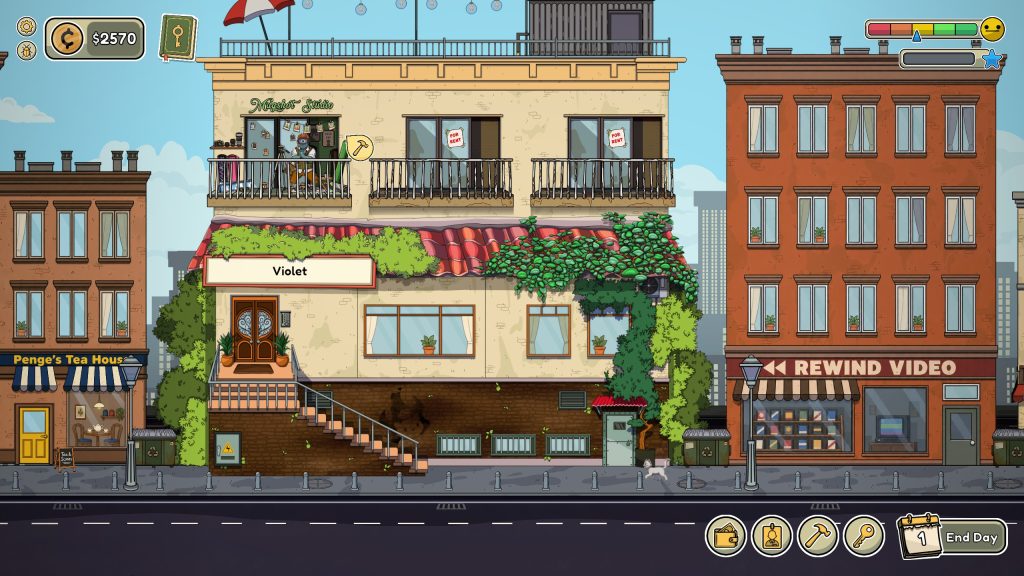
If a particular combination of residents proves noisy or troublesome, resolving the issue requires minimal effort, allowing you to reassign rooms or adjust living arrangements without devastating penalties. The building itself grows at a steady, manageable rate, matching the relaxed tempo set by its whimsical aesthetic and calming soundtrack. This absence of artificial urgency creates a meditative flow state where the mechanical objective is not victory or total market dominance, but rather maintaining a harmonious environment where every unique tenant can thrive comfortably.

Ultimately, Grandma Left Me A Building frames a fundamental question for the modern gaming landscape: how cozy do you actually like your cozy games? When evaluated against the broader spectrum of management titles, it sits firmly at the most low friction end of the scale. Unlike titles that force players to juggle strict seasonal deadlines, stamina meters, harsh environmental hazards, or intricate supply chains, this experience strips away punishment entirely in favor of total player autonomy and soothing spatial organization.
Rating 2 out of 5 Thumbs: 👍 👍(as a relaxing management experience)
For players seeking brutal systemic depth, complex financial modeling, or high pressure optimization puzzles, the mechanics will undoubtedly feel thin.
However, for those looking for a comforting, low stress sanctuary to zone out to after a long day, it delivers precisely the relaxing management experience it promises. Insofar as it can.