

Newsletter Subscribe
Enter your email address below and subscribe to our newsletter
Rising Above the Noise
 Byocta
The Guild Drama is a chronicle of ambition that refused to die. Across two decades of fractured releases, corrupted systems, and improbable survival, the franchise turned medieval life into a ruthless arena where power was taken rather than earned.
This retrospective follows a simulation series that rose in brilliance, collapsed under its own architecture, and endured through sheer volatility.
The rise, fragmentation, and stubborn survival of The Guild franchise represents one of the most enigmatic chapters in PC simulation history. This retrospective chronicles the trajectory of a cult classic that dared to combine economic calculation with medieval dynasty management, a lineage defined as much by ambition as by turbulence. The Guild Drama is not merely a historical arc; it is a case study in how a simulation series can fracture, mutate, and persist despite structural adversity.
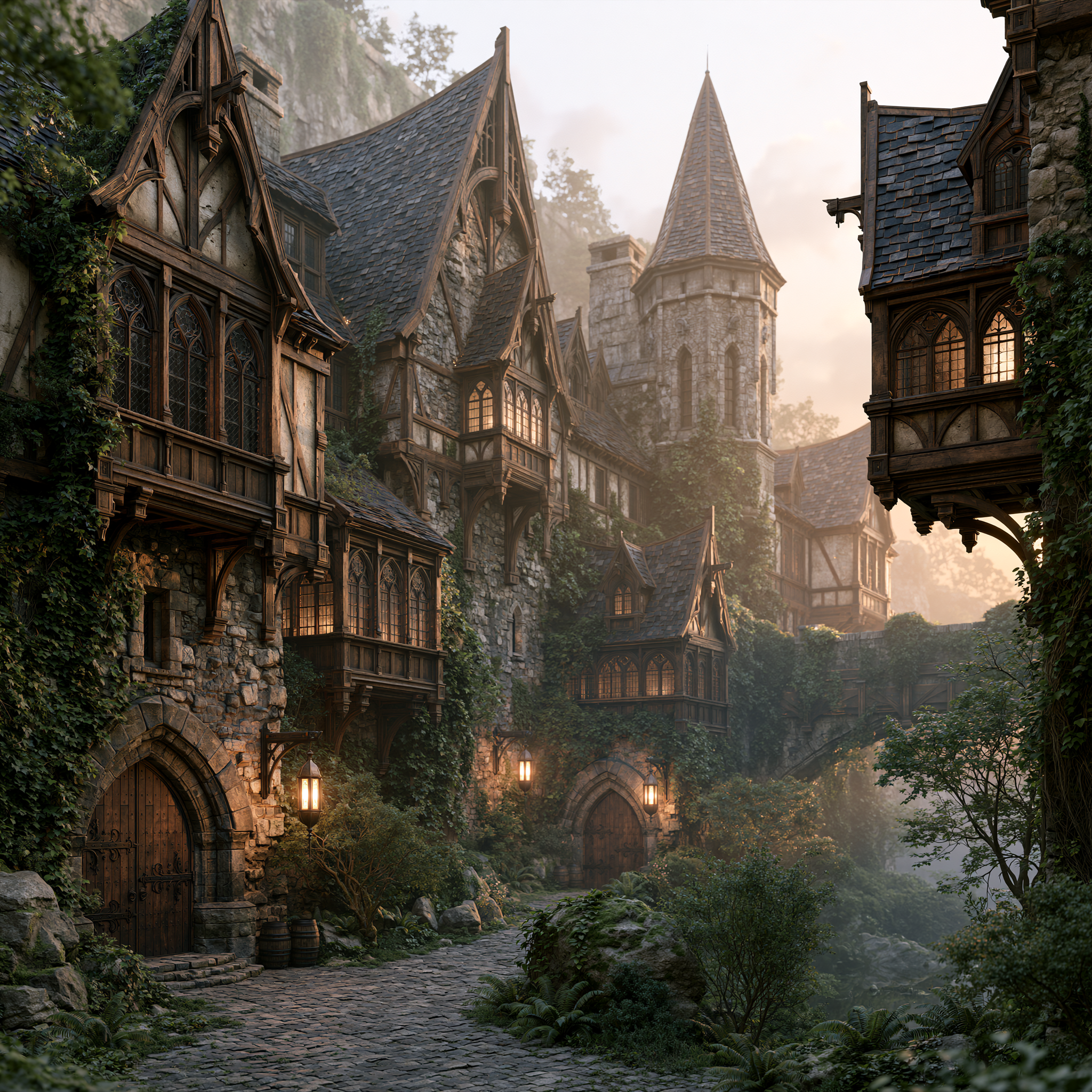
The inception of the franchise redefined the boundaries of the economic strategy genre. By embedding individual human ambition within a granular simulation of fifteenth century commerce, the original title transformed mundane supply chains into a cutthroat theater of political machinations and familial legacy.
It was never merely about the price of barley; it was about weaponizing municipal law to bankrupt a rival and bending civic institutions to the will of an emerging dynasty. The Guild Drama begins here, in the collision between economic rationality and personal vendetta.
As the timeline advanced, the structural integrity of the franchise faced severe technical tribulation. The subsequent iterations expanded the geographical scope and visual fidelity, yet they simultaneously introduced a cascade of optimization anomalies that polarized the community.
The architectural ambitions of the engine often clashed with the intricate data processing required for hundreds of autonomous simulated citizens, producing a tension between aspiration and execution that became a defining motif of The Guild Drama. The series evolved, fractured, and repeatedly attempted reinvention while its most loyal players clung to its systemic promise.
The enduring legacy of the series rests not upon mechanical polish but upon its unmatched willingness to let players rule through systemic corruption, marital alliances, and economic warfare. The Guild Drama persists because no other simulation has embraced the full spectrum of medieval power, from courtroom manipulation to market sabotage, with such unapologetic intensity.
This article contains forward looking analysis and probability estimates. These are editorial projections, not factual claims. Both The Guild 2 and The Guild 3 run without compatibility issues on modern hardware.
The Guild Drama Editorial projection