Rising Above the Noise

Byocta
Alabaster Dawn (PC)
Share your love
Alabaster Dawn: CrossCode 2.0
Alabaster Dawn begins with the kind of premise that makes you wonder whether the universe is fundamentally hostile or simply indifferent. The world has been reduced to a wasteland by an entity named Nyx, which is exactly the sort of name you would expect from something that ruins everything. Humanity survives in scattered pockets, clinging to whatever remains, which feels uncomfortably familiar if you have ever lived in a cramped apartment with unreliable heating.
You play as Juno, a chosen figure who is not entirely trusted and not entirely understood, which is a feeling I relate to more than I would like to admit. The early chapters revolve around helping people who are trying to maintain some semblance of order in a world that has clearly given up on the idea. You move from one region to another, each one presenting a new crisis that feels strangely personal, as if the world is quietly asking you to explain why everything has gone wrong.
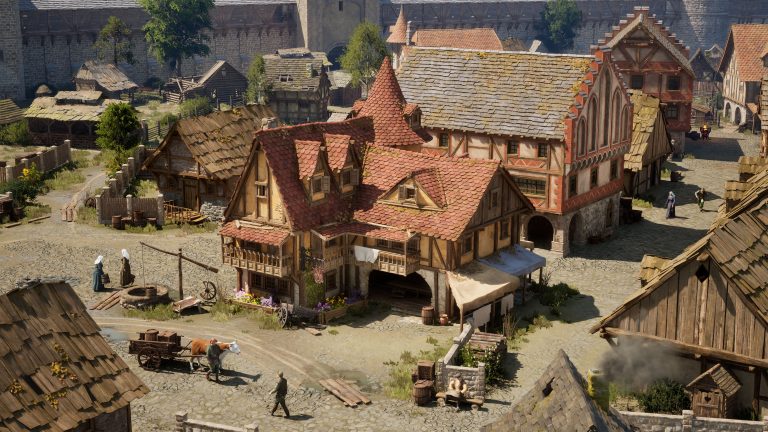
The early chapters take you through several regions that have been twisted by the corruption, each one clinging to a sense of normalcy the way I cling to the hope that my morning coffee will solve my problems. These places are not systems to be managed. They are small, fragile pockets of life that seem to be surviving out of sheer stubbornness. The game uses them as stages for modest acts of recovery, and the result feels deliberate, almost contemplative, as if the world itself is trying to remember how to function.
The combat system is surprisingly energetic. Radical Fish has moved to a new engine, and everything feels faster and more flexible, almost as if the game is trying to outrun its own existential dread. Weapons switch instantly, elemental interactions stack in ways that feel both clever and slightly overwhelming, and the rhythm of movement borders on choreographic. It is the kind of system that makes you think the developers spent a great deal of time worrying about whether players would feel powerful enough, and then decided to give everyone a small identity crisis instead.
Exploration benefits from a subtle three dimensional perspective that preserves the charm of pixel art while making the world feel more physical. Puzzles use height and distance in ways that CrossCode never could, and every area feels like it was designed by someone who has spent a great deal of time thinking about how people move through space, which is more than I can say for most architects. The world feels carefully arranged, as if someone wanted to make sure you never forget that you are walking through a place that has been broken and is trying very hard to pretend otherwise.
The Early Access scope is modest. You receive the story up to the midpoint of the second chapter, a handful of dungeons, a selection of weapons and abilities, and a separate roguelite mode that feels like a controlled environment for testing your reflexes and your patience. The content is polished and stable, and the studio has made it clear that the full game will take years to complete. This is not a sprint. It is a long term commitment, the kind that makes you question your life choices in a quiet, reflective way.
Alabaster Dawn enters Early Access with a clear identity and a long road ahead. The foundation is strong, the systems are promising, and the world has enough mystery to sustain a multi year development cycle. If the studio maintains its pace and its discipline, this could become one of the most significant independent role playing games of the decade.
For now, It presents a grander framework, yet whether it eclipses its predecessor depends on a singular preference: do you favor the clockwork constraints of a complete arena, or the macroscopic blueprint of a title embarking on a confirmed two year Early Access trajectory?