



Newsletter Subscribe
Enter your email address below and subscribe to our newsletter

Rising Above the Noise
 Byocta
Developed by Melbourne based solo creator Thomas Janson under Janson RAD and published by Fireshine Games, Gunboat God enters the arcade shooter landscape with a focused mechanical premise. Following its April 2026 release, the game places players in command of an exiled gunboat undertaking a journey toward a distant Citadel across a hostile oceanic frontier. Rather than emphasizing narrative progression or expansive campaign structure, the title centers its design around rapid-fire action, high-mobility combat, and a large volume of short-form encounters.
At the heart of the experience is a tri-strata movement system that allows players to navigate the battlefield across the ocean surface, beneath the waves, and through the air. Coupled with modular weapon upgrades, vessel augments, and more than two hundred stage-based challenges, Gunboat God appears designed around continuous mechanical adaptation rather than long-form strategic planning.
The game’s central ambition is straightforward but demanding: can a highly kinetic combat loop sustain meaningful tactical evolution across hundreds of micro-sized missions? The answer will depend on whether its movement systems, enemy design, and arsenal progression continue to generate new combat decisions throughout the campaign or eventually settle into repetitive patterns despite their expanding scope.
RELEASE DATE: 19 Feb, 2026
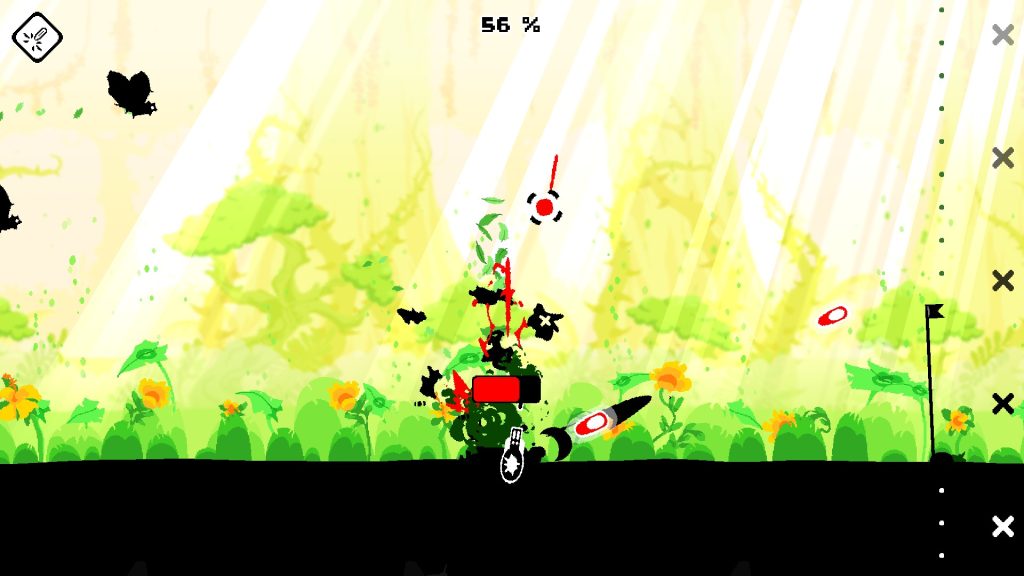
Player agency in Gunboat God is defined by movement across three combat layers: the ocean surface, the underwater depths, and the air above. Players can transition between these spaces to evade threats, engage specific enemy types, and navigate environmental hazards. Supplementing this mobility are offensive tools including dashing, hull bashing, and on-the-fly transformations that alter how encounters are approached. As a result, decision making appears centered on positioning, timing, and threat prioritization rather than resource management or long-term planning.
Progression is built around mechanical expansion rather than narrative development. The game features eight upgradeable weapon systems, unique super moves, and more than ten vessel augments that enhance combat capabilities. Advancement is facilitated through mission rewards and upgrades provided by Yeti, a crocodile mechanic responsible for improving the vessel’s hull and armaments. The key question surrounding progression is whether new equipment meaningfully changes combat behavior or primarily increases numerical effectiveness.
A significant component of the game’s design is its emphasis on visual readability. Foreground objects, enemy projectiles, and the player vessel are presented as stark silhouettes against vibrant environmental backdrops, creating a clear visual hierarchy intended to support high-speed gameplay. The effectiveness of this approach will depend on whether enemy attacks and environmental hazards remain readable during larger encounters where particle effects and combat density increase substantially.
Structurally, Gunboat God is composed of more than two hundred short-form stages spread across over twenty mission archetypes. Early encounters appear designed to establish core movement and combat mechanics, while later stages introduce boss encounters and more demanding objective structures. Long-term engagement is expected to derive from score chasing, completion goals, cooperative play, and mastery of the game’s movement and combat systems rather than narrative progression or expansive metagame mechanics.
Taken together, these systems position Gunboat God as a mechanically focused arcade shooter built around mobility, weapon customization, and condensed mission design. The success of this structure will depend on whether the tri-strata movement system and expanding arsenal continue to produce new tactical challenges across the full length of the campaign.

Rating 2 out of 5 Thumbs: 👍 👍(Excellent Shoot em Up)
Gunboat God succeeds precisely because it honors its mechanical lineage, delivering a kinetic and immediately gratifying arcade loop that satisfies a genuine craving for pure reflex driven action. By stripping away modern systemic bloat in favor of crisp maritime handling and relentless pacing, the game achieves a tactile resonance that rewards spatial mastery from the very first sortie.
While its focused scope naturally limits long term narrative or strategic sprawl, its tight execution ensures that enthusiasts of classic coin operated shooters will find an engaging, uncompromisingly direct experience that hits its mark with refreshing precision.




[…] The Regreening Gunboat God […]