




Newsletter Subscribe
Enter your email address below and subscribe to our newsletter

Rising Above the Noise

 Byocta
The Crimson Maid presents itself as a polite hybrid of first‑person exploration, visual novel storytelling, and light puzzle mechanics, but its true identity lies beneath that description. What appears to be a period romance wrapped in a murder mystery is, in practice, a tightly controlled cinematic experience that uses the language of film rather than the logic of traditional game design. The player inhabits the role of a young cleric, and this choice immediately establishes a moral battlefield. Desire is not a neutral narrative theme; it is a violation of duty, a breach of faith, and a source of internal conflict that shapes every interaction. Most visual novels rely on blank‑slate protagonists, but here the player’s identity is loaded with guilt, expectation, and social constraint. The romance becomes dangerous, and the mystery becomes psychologically charged.
The maid herself is not simply a love interest. She is the narrative engine. Every scene, every puzzle, every emotional beat revolves around her presence. She is temptation, threat, catalyst, and mystery at once. Roles that would normally be distributed across multiple characters are compressed into a single figure, creating a story where the player’s attention is constantly pulled toward her whether through attraction, suspicion, or fear. This tight focus gives the narrative an intimacy that few indie titles attempt.
The puzzle elements reinforce this structure. They are symbolic rather than mechanical, woven into the narrative instead of layered on top of it. The player navigates conversational puzzles, emotional cues, and environmental storytelling rather than locks or switches. These puzzles serve the story rather than interrupt it, emphasizing the game’s commitment to narrative over gameplay.
The period setting is not decorative. It shapes the social rules, the dialogue, the stakes of the romance, and the structure of the mystery. Religious authority, gender expectations, and rigid moral codes give weight to choices that would be trivial in a modern setting. The historical backdrop amplifies tension and justifies the protagonist’s internal struggle.
Technically, The Crimson Maid behaves less like a game and more like a cinematic player wrapped in a game engine. Heavy use of prerendered sequences, dynamic resolution shifts, and protected media flags make traditional capture tools unstable. The engine swaps render pipelines mid‑scene, triggering Windows GPU sandboxing and disabling hooks from OBS, Game Bar, and similar tools. The architecture reinforces the game’s identity as a filmic experience rather than a mechanical one.
This cinematic identity becomes even clearer when examining the narrative’s internal machinery. The wife’s incongruous cheerfulness functions as atmospheric deflection, the primary psychological pivot. In this genre, such demeanor is rarely genuine; it is almost always a shroud for complicity or detachment. It directs the player to wonder whether her indifference is born of malice, long‑term emotional severance, or the quiet knowledge that the power dynamic is already shifting in her favor. The introduction of two young men as potential romantic conduits creates competitive tension, forcing the player to calculate which of these characters is being manipulated, which is the willing accomplice, and which serves as the ultimate red herring.
The financial catalyst sits beneath all of this. The core conflict hinges on the intersection of the “Celestial Curse” and the Rosenthal estate. Whether the maid is a predator or a catalyst for the family’s self‑destruction, the endgame almost certainly involves the liquidation or theft of the fortune. The poisoning acts as the ticking clock, pushing the player toward speed over thoroughness, which is where the game hides its most deceptive clues. The narrative is a machine designed to make the player feel as though they are solving a crime while actually guiding them toward a predetermined reveal in which the truth is simply the byproduct of the family’s existing corruption. The maid does not create the rot; she exposes it.
This tension between cinematic control and interactive illusion defines the entire experience. The player is given the sensation of agency while the story quietly directs every outcome. The result is a prestige‑style indie narrative that blends romance, guilt, temptation, and murder into a tightly focused psychological drama. It is not a puzzle game, not a horror title, and not a traditional visual novel. It is a narrative experiment that uses cinematic structure to explore the conflict between faith and desire.
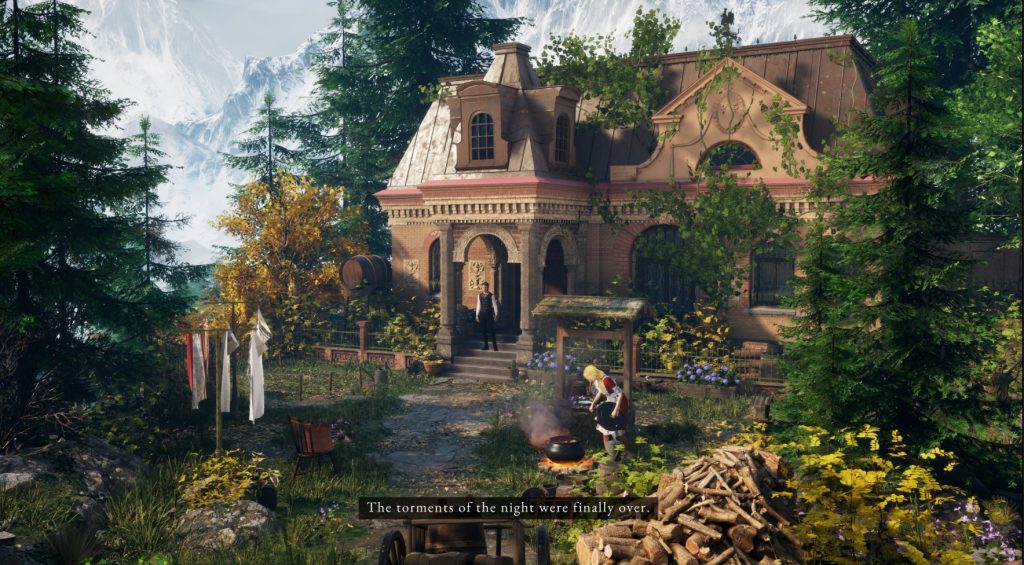
Covering The Crimson Maid means acknowledging this identity. A scene‑only walkthrough becomes an ironic guide that reflects the game’s nature rather than mocking it. Because the experience is built almost entirely from cinematic sequences, a scene‑only presentation is both accurate and meta‑commentary. It becomes a visibility tool, a vibe reel, and a critique simultaneously. You are not reviewing a conventional game; you are dissecting a narrative machine designed to reveal the danger of beauty, the weight of guilt, and the inevitability of betrayal.
Out now




[…] The Crimson Maid – Octavius Reviews […]