

Newsletter Subscribe
Enter your email address below and subscribe to our newsletter

Rising Above the Noise
 Byocta
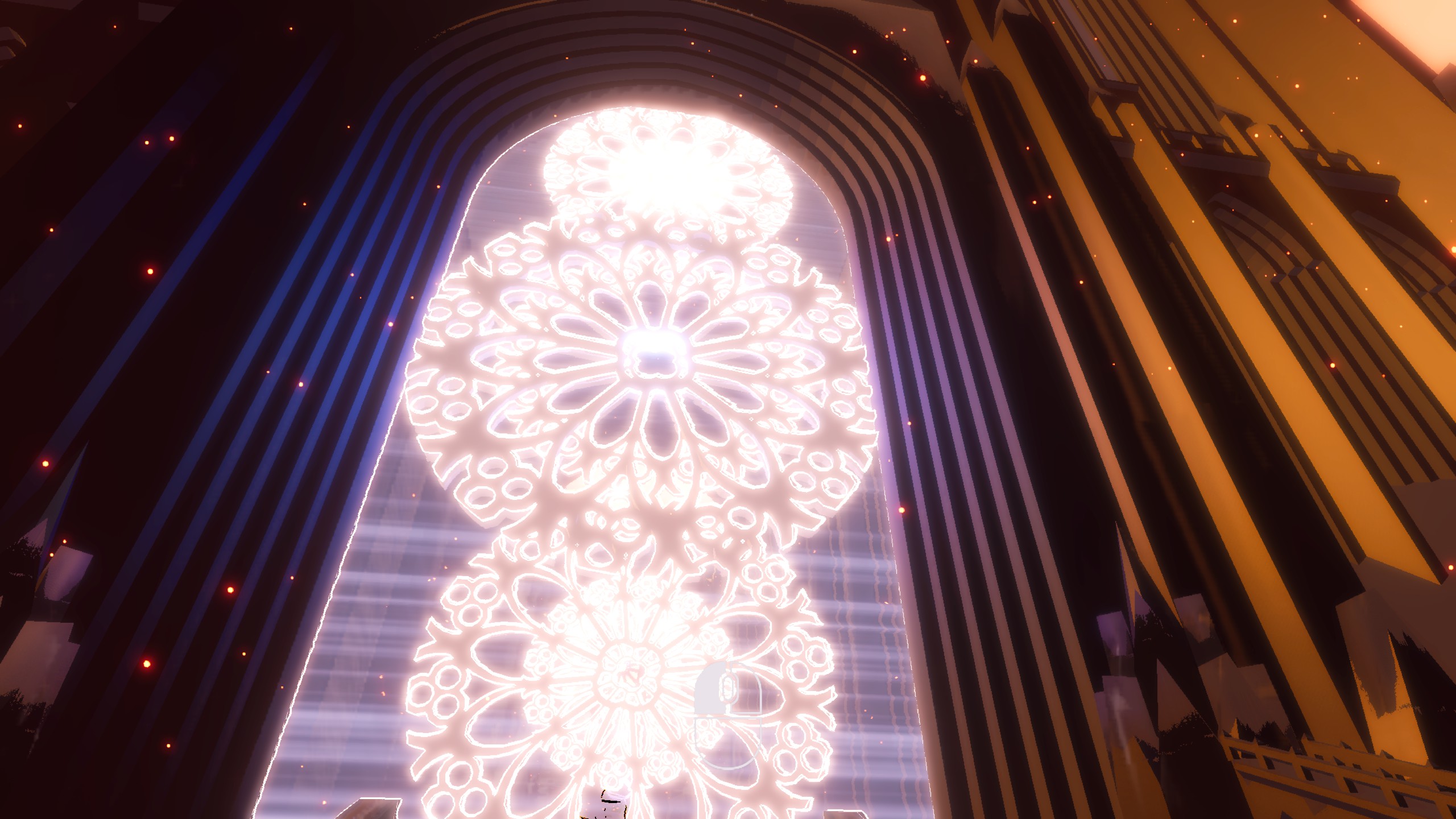
Explore a city of Gothic architecture torn between past and future in Desolus, a first person puzzle game. Solve Escher-like puzzles through the use of black holes, traveling back and forth through time to make architecture whole again. Prevent a cataclysm which fractures reality, and save the city.
Desolus is created by Mark J. Mayers, produced by Ty Taylor and Chris Laviña, features an original soundtrack by Kyle Landry, audio by Max Sandler, with 3D modelling support from Desiree Milner.

The geometric puzzle genre has long suffered from an identity crisis, frequently conflating spatial manipulation with profound intellectual challenge. Mark J. Mayers’ Desolus, published in tandem with The Quantum Astrophysicists Guild (an enterprise heavily suspected to be a singular, industrious moniker for Mayers himself), stands as the latest aesthetic marvel to invite this precise diagnostic skepticism. While the title boasts a pedigree intertwined with the sublime engineering of Outer Wilds and Manifold Garden, the current playable build reveals a fundamental disconnect between its lofty, atmospheric ambitions and its mechanical execution.
With a projected release window slated for Q3 2026, one is forced to look at the skeletal state of the current framework and wonder how such a timeline approaches structural realism.
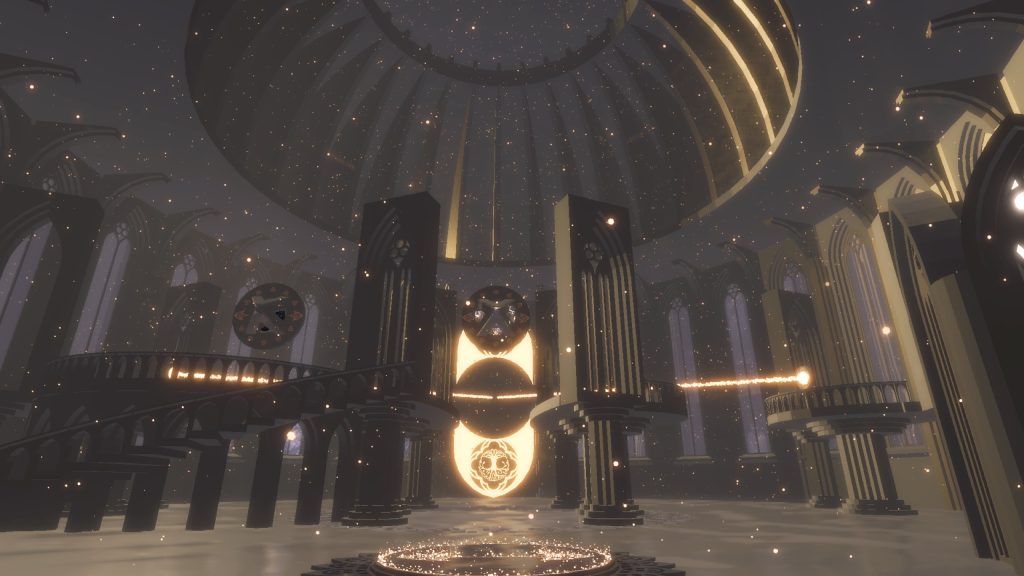
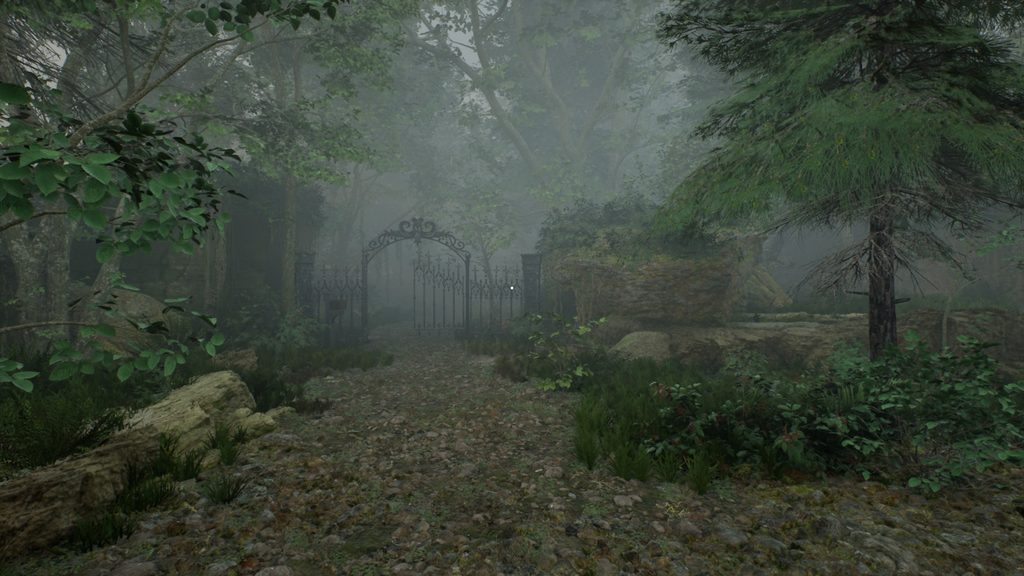
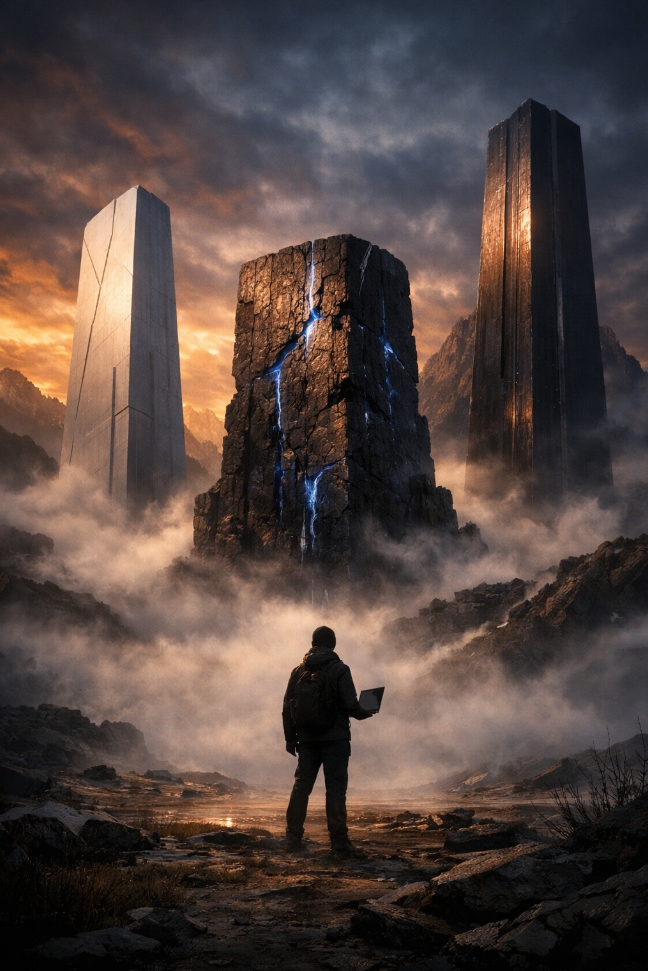
On a aesthetic level, Desolus is undeniably captivating. The architecture is a somber, dreamlike rendering of Gothic cathedrals fractured by an enigmatic cataclysm. The core mechanic requires the player to navigate impossible, M.C. Escher inspired environments by deploying black holes to bridge dual timelines, shifting components between the past and the future to reconstruct ruined pathways.
However, once the initial sensory enchantment of the Unreal Engine performance dissipates, the intellectual weight of the exercise begins to feel remarkably hollow.
The primary mechanical critique is simple: the puzzle loop frequently devolves from authentic, cognitive problem solving into the mere rearrangement of domestic furniture.
Instead of demanding a rigorous, paradigm shifting comprehension of temporal mechanics, the gameplay loops consist largely of clicking on portals from one place to another, or repositioning staircases until a path arbitrarily aligns. Then moving through a series of archways. The player is not so much mastering the laws of a distorted reality as they are acting as a glorified cosmic mover, shifting heavy stone assets across a localized spaces until the geometric lock clicks. It is a process of trial and minor adjustment rather than genuine epiphany.
This mechanical superficiality exposes a broader, more systemic vulnerability within the architecture: the profound absence of narrative connective tissue. Mayers has successfully generated the evocative prologue of a haunting atmospheric piece, yet the overarching story remains frustratingly elusive, buried beneath the beautiful geometry.
The promotional literature promises a harrowing quest to save a metropolis from temporal annihilation alongside a mysterious guardian, yet the experiential reality of the build offers little more than a silent sequence of abstract chambers. For a project that has lingered in various states of incubation for nearly a decade, the lack of structural narrative density is concerning. Without an emotional or intellectual anchor to justify the spatial tediousness, the cataclysm lacks stakes, and the guardian feels less like a character and more like a decorative statue.
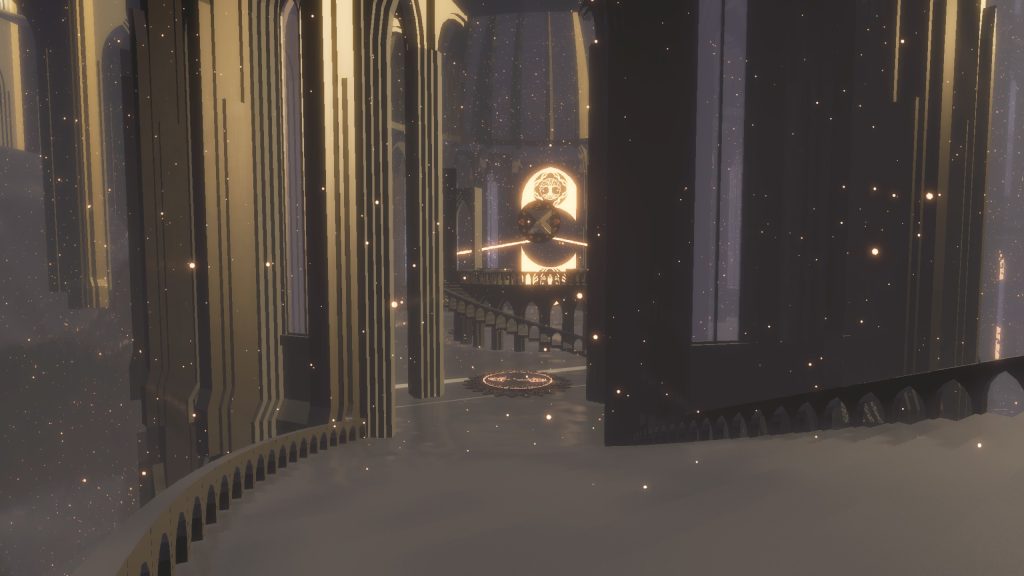
Given the vast distance between this high fidelity shell and a completely realized, non linear metropolis, the impending autumn release target feels extraordinarily optimistic. Desolus functions beautifully as a conceptual tech demo, a testament to what a dedicated solo developer can harvest from modern engine capabilities. Yet as a holistic gaming experience, it remains woefully incomplete.
We look forward to what this universe might eventually blossom into during the fullness of time, but a substantial amount of foundational engineering is required before these impossible structures offer an experience that is truly cerebral.

INTRODUCTORY OFFER! Offer ends 29 October currently 17.99 on steam