



Newsletter Subscribe
Enter your email address below and subscribe to our newsletter

Rising Above the Noise

 Byocta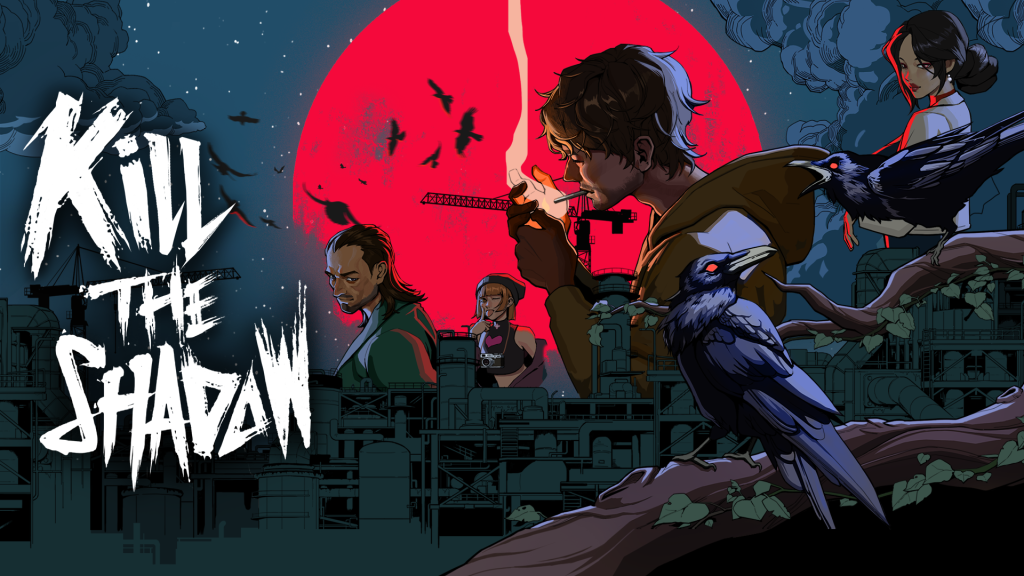
Kill the Shadow presents a world that appears rich with depth and layered geometry, yet the player is confined to a narrow lateral plane that cannot meaningfully engage with that visual promise. The environment looks volumetric, but it behaves as a flat corridor. This contradiction shapes every investigative action the player attempts. Spatial navigation becomes a negotiation with surfaces rather than an exploration of environments, and the momentum of inquiry is repeatedly interrupted by the limits of the interface.
The tension between presentation and interaction becomes most visible when clues are obscured by environmental clutter. Pixel sprites sit inside dense three dimensional spaces, but the player cannot rely on spatial intuition because the world does not respond to volumetric logic. Instead, the player must sweep the cursor across the screen in search of invisible triggers. This process is not investigative. It is mechanical. It replaces deduction with pixel hunting and forces the player to work against the visual design rather than with it.
Dialogue interactions follow the same pattern. Characters remain static until specific state conditions are met. The player must repeatedly reengage the same figures, cycling through exhausted dialogue in the hope that a new item or event has unlocked a fresh response. This is not systemic logic. It is flag polling. The player asks the same question until the game decides to answer it. Agency collapses into repetition.
Your personal observation reinforces this structural critique. The visual density does not enrich the story or deepen the atmosphere. It obscures the very clues required to progress. Tasks drag out not because the mystery is complex, but because the environment refuses to communicate. The player spends more time fighting the presentation than engaging with the narrative. The aesthetic ambition becomes a liability.
A work that aspires to investigative depth must align its visual, mechanical and narrative structures toward clarity. The player must be able to trust what they see and interpret the environment without fighting it. When these structures collide rather than cooperate, the mystery becomes a burden rather than a pursuit. The world becomes a barrier rather than a space of inquiry.
Rating 1 out of 5 Thumbs: 👍 (Suitable for anyone who likes flag driven poorly written Chinese mysteries.)
Kill the Shadow earns a single thumb. The core concept has potential, but the investigative loop is dominated by flag driven progression, visual clutter and repetitive interaction patterns. The experience feels more like a maintenance routine than a mystery. It may appeal to players who enjoy state based Chinese adventure titles, but its structural issues limit its broader appeal.



Demo: Kill The Shadow