



Newsletter Subscribe
Enter your email address below and subscribe to our newsletter

Rising Above the Noise
 Byocta
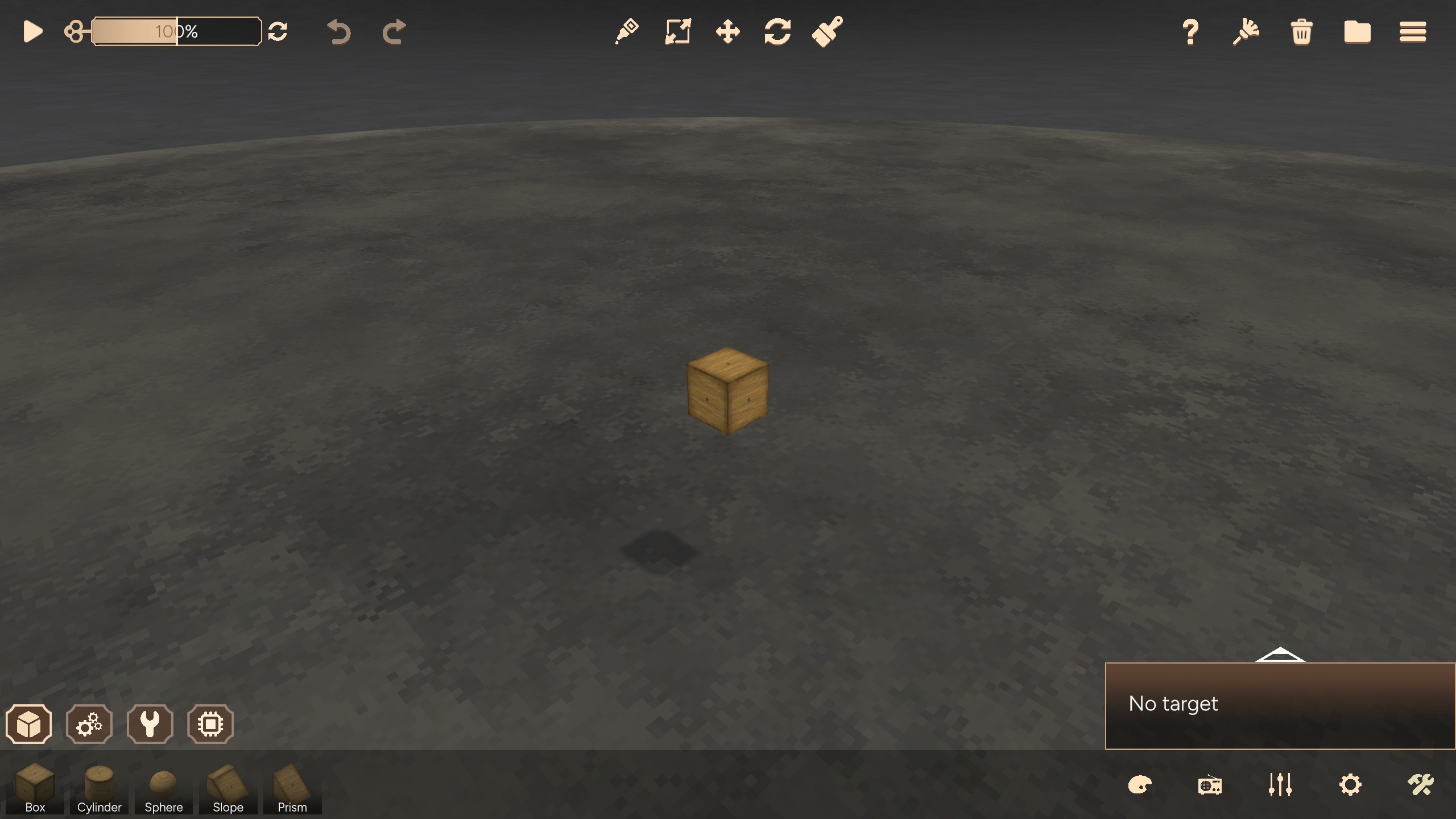
Geareo arrives as one of those rare projects that immediately exposes the quiet absurdity of the modern sandbox landscape. It does not posture, it does not decorate itself with theatrical spectacle, and it makes no attempt to disguise its intentions behind cinematic gloss. Instead it presents a workshop of pure mechanical reasoning, a space where motion, force, and structure behave with a clarity that feels almost anachronistic in a medium increasingly defined by ornamental excess.
The demo alone is enough to signal that this is not another physics toy but a deliberate reconstruction of tactile engineering principles, rendered with a seriousness that most contemporary titles would never dare to attempt. What emerges is a work that feels both startlingly focused and strangely isolated, a simulation of uncommon integrity that seems determined to exist entirely on its own terms.
There is a distinct tragedy in watching a project of profound structural integrity treat its own distribution with the passive detachment of a discarded message in a bottle. Geareo stands as a triumph of physics simulation, a rare artifact that respects deterministic logic rather than offering the player cheap, hardcoded shortcuts. Yet, the architectural brilliance inside the software code is matched only by a terrifying administrative void outside it.
WITWELD operates not as a contemporary game studio but as a digital ghost, maintaining an absolute vacuum where an external infrastructure should live. There is no press kit, no corporate roadmap, and no public facing communication strategy. The title achieved its current visibility entirely through algorithmic curation during Steam Next Fest, an accidental beneficiary of Valve’s internal recommendation machinery. But relying on an algorithm to sustain a creative work is a dangerous form of passive submission.
The contemporary independent market has deluded itself into believing that visibility is a meritocracy managed by server code. This is an intellectual error. An algorithm can provide an initial spike of curiosity, elevating a demo based on momentary engagement metrics, but it cannot cultivate a lasting critical legacy. Without a deliberate, institutional presence, a project remains entirely invisible to the wider cultural conversation.
The consequences of this isolation are structural:
To observe Geareo is to witness a masterpiece existing in a state of profound precarity. It is an extraordinary laboratory built on a foundation of shifting digital sand. If WITWELD continues to treat external infrastructure as an unnecessary luxury, this brilliant exercise in mechanical reasoning will likely vanish into the massive, uncatalogued noise of the digital marketplace.
True perfection requires both structural precision within the simulation and a conscious effort to assert that truth to the world. Without the latter, even the most immaculate clockwork mechanism is destined to spin silently in an empty room, unnoticed and unremembered.