


Newsletter Subscribe
Enter your email address below and subscribe to our newsletter

Rising Above the Noise

 Byocta
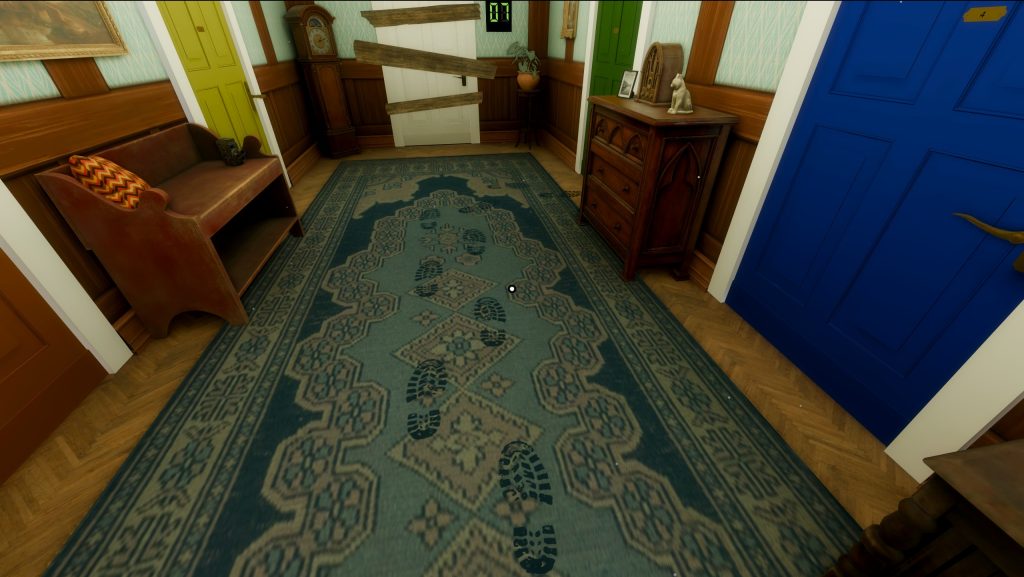
The observation loop subgenre has officially entered its minimalist phase. Following the commercial trail blazed by Exit 8, independent developers are increasingly relying on localized spatial repetition to manufacture tension. The latest entry under this surgical lens is the preview build of The Door at the End of the Hall by renolc.games, currently positioned for a full launch on July 20, 2026.
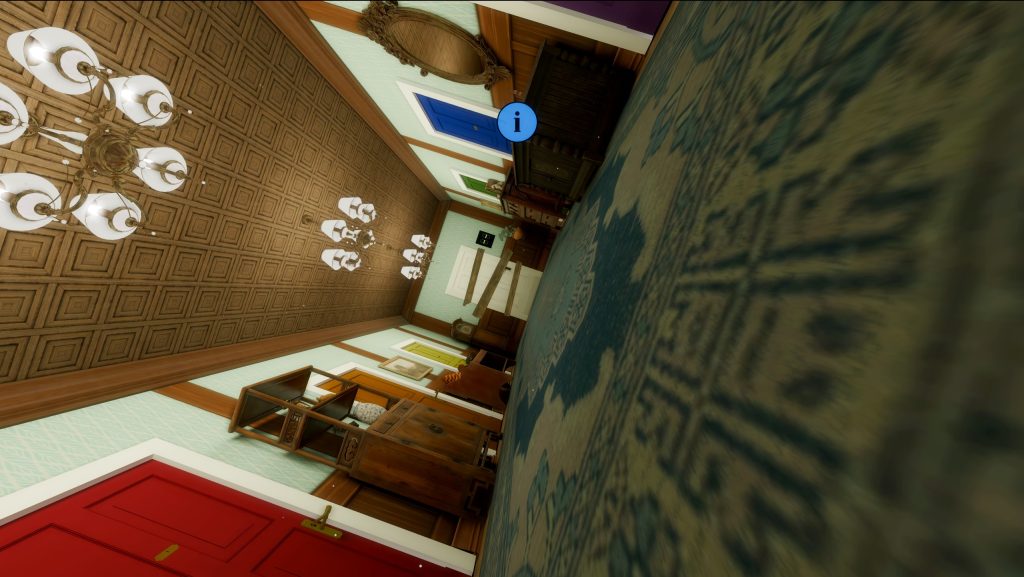
The observation loop subgenre has officially entered its minimalist phase. Following the commercial trail blazed by interactive titles that prioritize environmental memory over traditional puzzle mechanics, independent developers are increasingly relying on localized spatial repetition to manufacture tension. The latest entry under this analytical lens is the preview build of The Door at the End of the Hall by renolc.games, currently positioned for its official debut on July 20, 2026. This title serves as an illuminating case study in how low stakes atmosphere handles mechanical exhaustion.
The fundamental premise of the observation puzzler relies entirely on the cognitive relationship between player memory and environmental stability. The developer establishes a baseline space, introduces structural anomalies, and tasks the player with identifying departures from the norm. In this preview build, the loop presents itself with absolute structural simplicity, offering a low stakes escape room atmosphere that flirts with psychological horror without ever fully committing to the genre.
The title manages to secure a few genuine surprises through careful environmental manipulation rather than relying on cheap interactive jump scares. By subverting ordinary geometry, it achieves a quiet, creeping unease. Objects migrate across the space, subtle details alter when the perspective shifts, and the simple act of navigating the repeating hallway feels increasingly disorienting. This specific presentation avoids the loud, aggressive tropes of contemporary horror titles, cultivating instead a weird, localized tension. The atmosphere mirrors the tactile problem solving of a physical escape room, functioning perfectly well as a brief, self contained piece of interactive surrealism for a quiet afternoon.
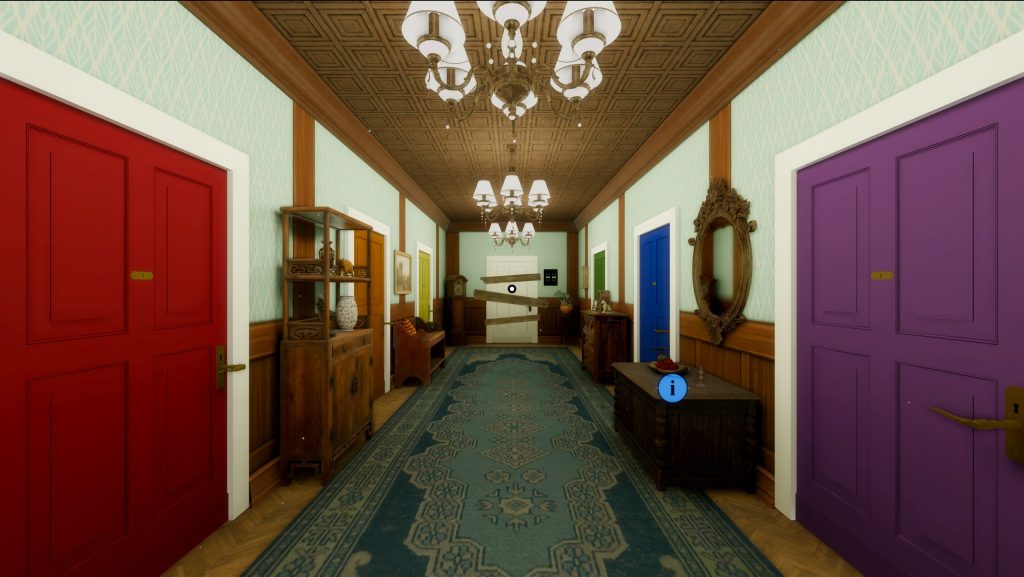
However, the primary architectural vulnerability of The Door at the End of the Hall lies in its strict mechanical upper bound. The game features exactly 50 anomalies to discover before the door unlocks and the loop concludes at present. Once the player trains their eye to recognize the total library of permutations, the experiential magic dissolves. The mechanical truth is laid bare. The anomalies appear to be fixed binary flags rather than procedurally shifting logic, which causes the gameplay curve to flatten completely upon a second playthrough. The cognitive tension disappears entirely because the player is no longer exploring an uncanny psychological space. They are merely ticking boxes off an administrative checklist. This rapid flattening severely limits long term replay value, exposing a strictly linear puzzle masquerading as a circular nightmare.
Because the structural loop flattens out entirely once the 50 anomalies are cataloged, the ultimate success of the title depends entirely on its retail positioning at launch. If the final price aligns with its status as a brief, one off experience, it stands as a worthy piece of light observation software. Until the final version materializes on July 20, the industry remains in its own observational loop, waiting to see if renolc.games introduces deeper structural variables or if the final build simply relies on the singular charm of its initial, creepy execution.
The Door at the End of the Hall