



Newsletter Subscribe
Enter your email address below and subscribe to our newsletter

Rising Above the Noise
 Byocta
The encounter with the title began not through intention but through intrusion. The site analytics registered a sequence of anomalous referral paths tied to a game I had never searched for, never clicked on, and never heard of. The effect was immediate and uncanny. A forgotten horror project should not be capable of generating any contemporary signal, yet the data suggested that something in the digital architecture had reached outward. The sensation was not one of discovery but of being discovered. The title behaved as if it had initiated contact, and this inversion of agency established the tone of the entire experience. Before I ever opened the game, it had already performed its genre. It had already haunted the periphery of my work.
The investigation into the source of the anomaly revealed a landscape shaped by abandonment and inertia. The game existed in fragments scattered across automated indexers, outdated publisher tags, and residual metadata that had never been retired. The publisher listed on Steam did not acknowledge the title on its own site. The developer maintained no visible press kit, no promotional material, and no formal support structure. What remained was a constellation of broken pages and cached mirrors that continued to echo the existence of a project that should have faded years ago. The modern web preserves such remnants without intention, and the result is a digital afterlife that feels more like a haunting than an archive. The game persisted not through active promotion but through the mechanical drift of the internet itself.
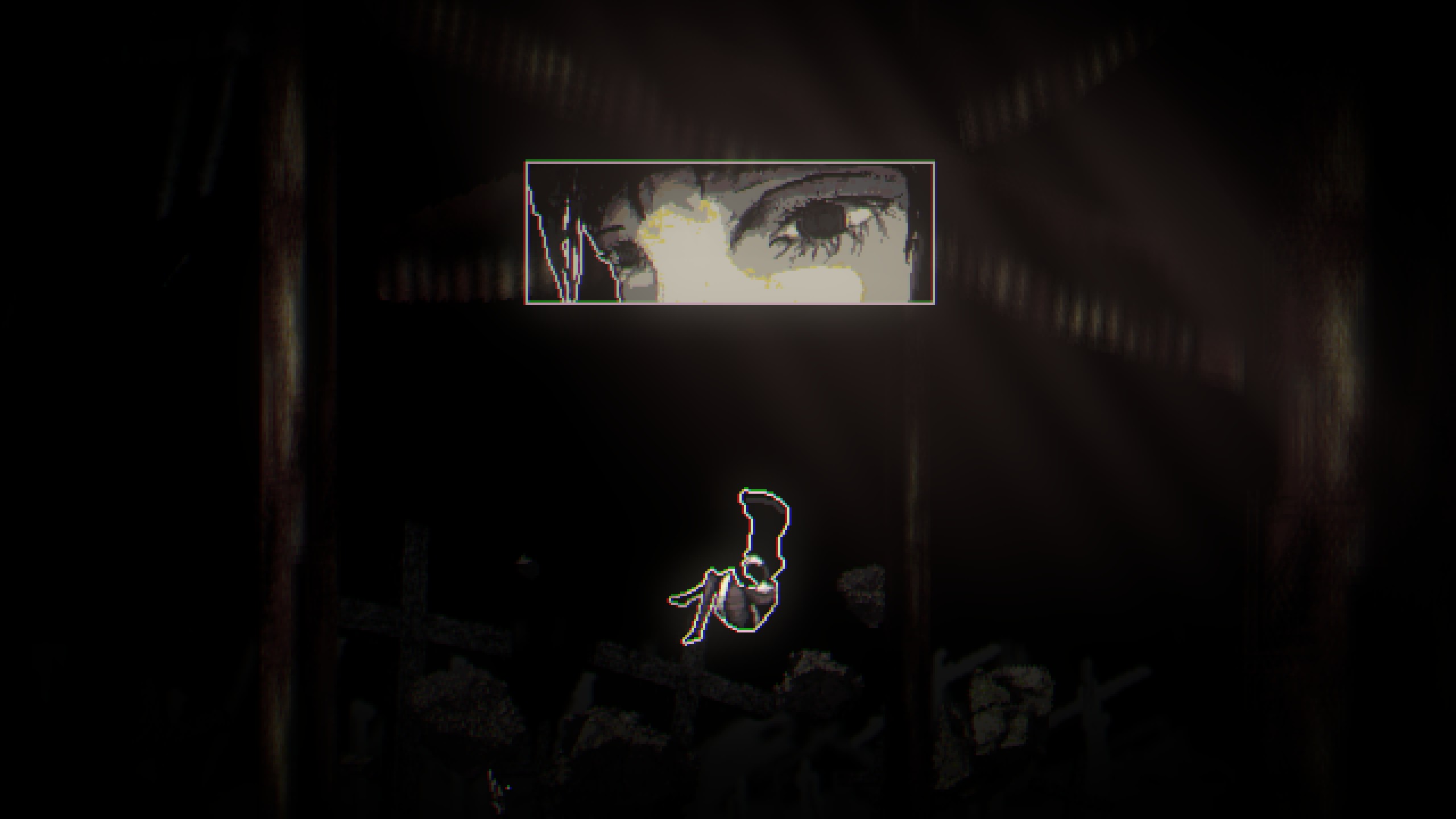
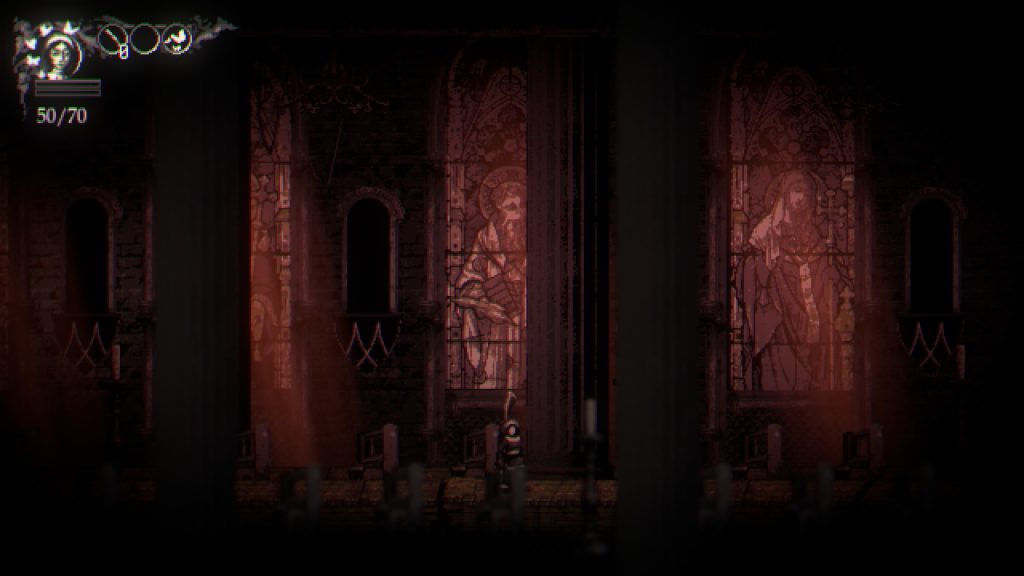
The decision to play the game transformed the haunting into a text. The work presents itself as a two dimensional horror platformer with a surprisingly coherent sense of atmosphere. The first chapter is fully playable and establishes a rhythm that is both deliberate and tense. The movement is readable, the framing is purposeful, and the tone is shaped by a religious motif that is provocative without descending into spectacle. The atmosphere is the strongest element. The game cultivates a sense of creeping dread through restraint rather than excess. The sound design, the visual austerity, and the symbolic detail accumulate into a space that feels anxious and charged. Even without deep expertise in the micro horror scene, the effect is unmistakable. The project understands how to create pressure through confinement and scarcity.
The mechanical structure is unforgiving. Death returns the player to the last manually placed respawn point, which means that progress depends entirely on the player remembering to anchor their position. Forgetting to do so produces long stretches of repetition that feel punitive, yet the brutality reinforces the vulnerability that defines the experience. The tension is not only narrative but procedural. The game forces the player to inhabit its rhythm rather than allowing them to dictate their own. The result is a form of intensity that is rough but sincere. The project may be small, but it is not careless. It is a solitary work shaped by the limitations of its creator, yet it carries a clarity of intent that many larger productions fail to achieve.
The unfinished state of the game situates it firmly within the realm of an Early Access preview. The absence of a publisher, the lack of official materials, and the silence across formal channels create the impression of a project that exists entirely through the persistence of its developer. It is a work exposed to the elements. Yet the quality of the first chapter demonstrates that the foundation is strong enough to justify continued development. The preview is not a verdict but a recognition of potential. The game is incomplete, but it is not incoherent. It is a focused effort that communicates its identity with surprising confidence.
The broader context reveals the peculiar ecology of forgotten indies. Projects do not vanish. They decay in public. Their remnants circulate through automated systems that preserve them without intention. When one of these remnants intersects with a living audience, the effect can feel personal even though it is entirely mechanical. This title exemplifies that dynamic. It surfaced through noise, asserted its presence through broken metadata, and ultimately revealed itself as a work in progress that deserves attention. The haunting was structural, but the experience was genuine. The game found me before I found it, and that inversion defines its place within the contemporary landscape. It is a reminder that the digital world is not a clean archive but a haunted space where the past continues to surface in unexpected ways.
Open Play Test on Steam: https://t.co/OmReRm7eQp



[…] METAMORPHOSIS – Octavius Reviews […]