

Newsletter Subscribe
Enter your email address below and subscribe to our newsletter

Rising Above the Noise
 Byocta
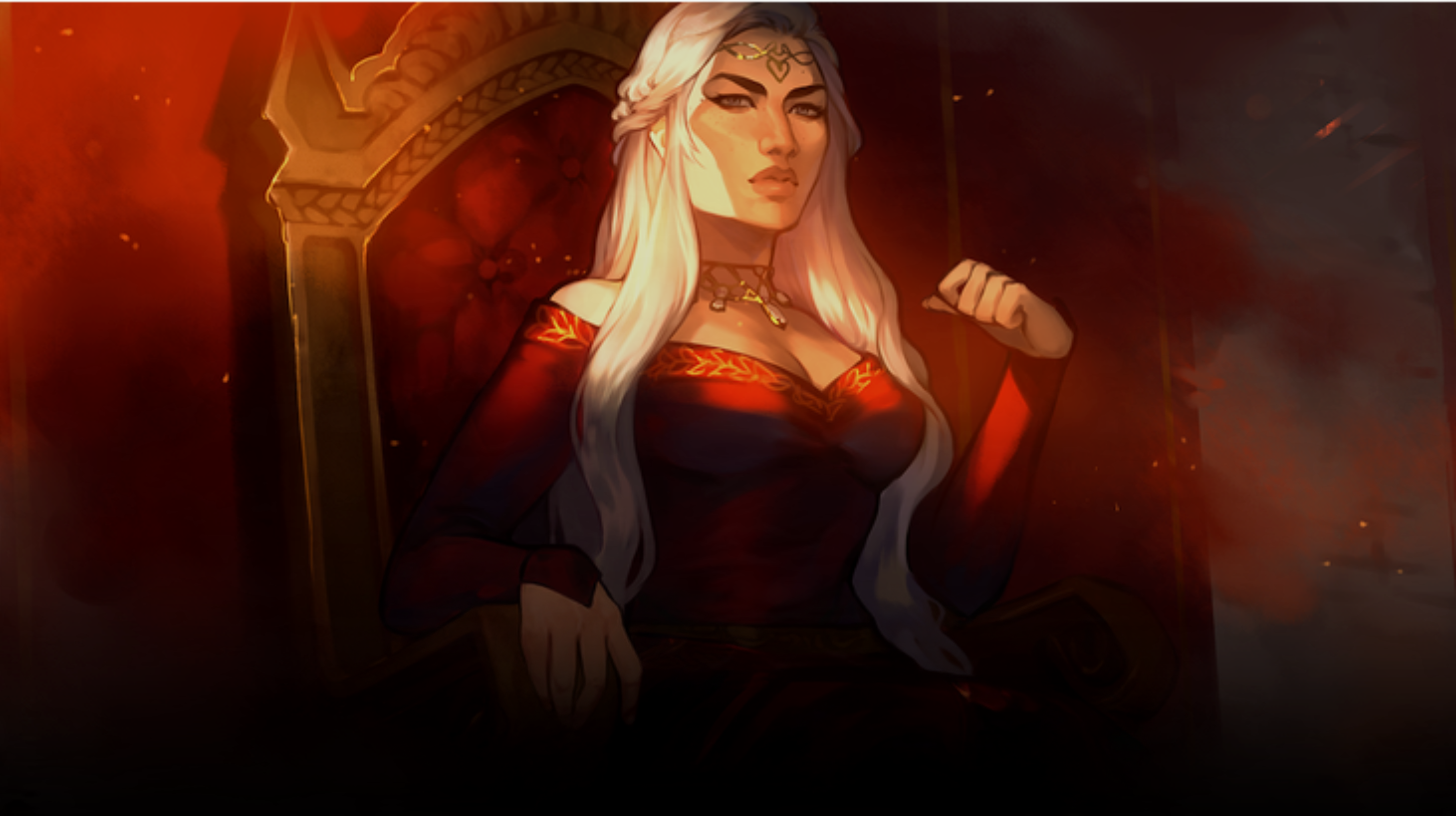
Developed by Synstoria and published by Abiding Bridge, Imperial Grace enters the narrative strategy landscape attempting to bridge the traditional otome visual novel with light kingdom management mechanics. Set within the medieval fantasy realm of Calidya, players assume the role of a newly crowned Empress struggling to consolidate authority following the death of her father. While the premise initially resembles a conventional romance-driven visual novel, the title distinguishes itself by incorporating resource management, political decision making, and petition-based governance into its narrative structure.
Rather than restricting progression to dialogue selections and character routes, Imperial Grace asks players to balance matters of state alongside matters of the heart. The game’s central design ambition appears to be the fusion of courtly romance and sovereign responsibility, challenging players to navigate political crises, economic pressures, factional interests, and personal relationships simultaneously.
The fundamental question facing the project is not whether either component functions independently, but whether those systems meaningfully interact. The success or failure of Imperial Grace will ultimately depend on whether political authority and interpersonal relationships operate as interconnected mechanics rather than parallel systems sharing the same narrative space.
RELEASE DATE: 11 Nov, 2026
At first glance, Imperial Grace appears to occupy familiar visual novel territory, placing players in the role of a newly crowned ruler navigating relationships within a politically complex court. However, beneath its romantic framework lies a second layer focused on governance, resource allocation, and statecraft. This dual structure forms the foundation of the game’s design philosophy and serves as the primary lens through which the title should be evaluated.
Player agency appears to operate across two interconnected dimensions. On a personal level, players shape the identity of the Empress through character customization and dialogue choices that influence relationships with key figures throughout the court. Simultaneously, the player exercises political authority through petitions, administrative decisions, and responses to emerging crises across the realm. The resulting structure suggests a deliberate attempt to merge personal narrative development with sovereign responsibility, allowing players to define not only who the Empress becomes as an individual, but also the type of ruler she chooses to be.
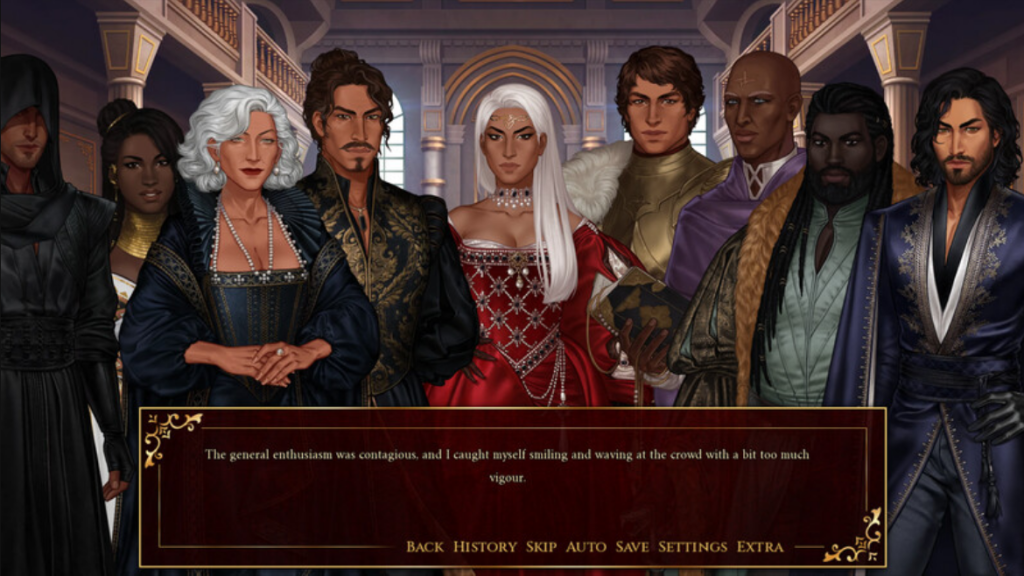
The effectiveness of this approach will depend largely on the degree to which these decisions produce meaningful consequences. Strong narrative strategy games derive their appeal from providing choices that generate both immediate and long-term outcomes. As a result, one of the key areas of analysis will be determining whether Imperial Grace allows political philosophies, moral priorities, and leadership styles to meaningfully alter the course of events or whether major outcomes ultimately converge regardless of player choice.
Progression appears to revolve around managing the stability of Calidya rather than pursuing conventional strategy game expansion. Instead of research trees, territorial conquest, or technological development, players oversee the allocation of limited resources across competing political demands. Treasury reserves, diplomatic initiatives, and court affairs seem to function as the primary currencies through which progress is measured. This creates the potential for a governance-focused progression loop where success is determined by balancing multiple priorities rather than maximizing a single metric.
A particularly notable design choice is the inclusion of adjustable difficulty options that allow players to engage with varying levels of economic pressure. Those interested primarily in narrative content can minimize resource management concerns, while players seeking a more strategic experience can embrace the consequences of financial and political decision making. This flexibility broadens the title’s accessibility while potentially preserving its strategic aspirations.
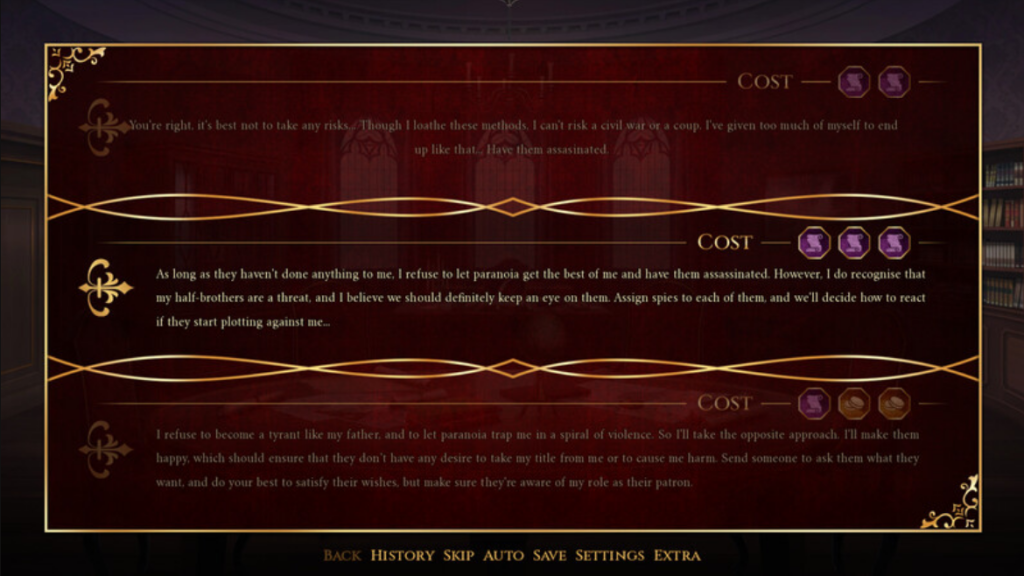
However, the central mechanical question remains unresolved. Effective management systems create strategic tension by forcing players to make difficult trade offs whose consequences reverberate throughout the campaign. Weaker systems often function as little more than periodic affordability checks, creating the illusion of depth without significantly influencing outcomes. Determining where Imperial Grace falls within this spectrum will be essential to assessing its long-term engagement and strategic value.
This challenge becomes even more significant when considering the game’s hybrid nature. Political simulation and otome storytelling traditionally pursue different forms of engagement. Political management systems reward optimization, planning, and systems thinking, while romance driven narratives rely upon emotional investment, character attachment, and interpersonal drama. Blending these approaches is an ambitious undertaking because each must reinforce rather than undermine the other.
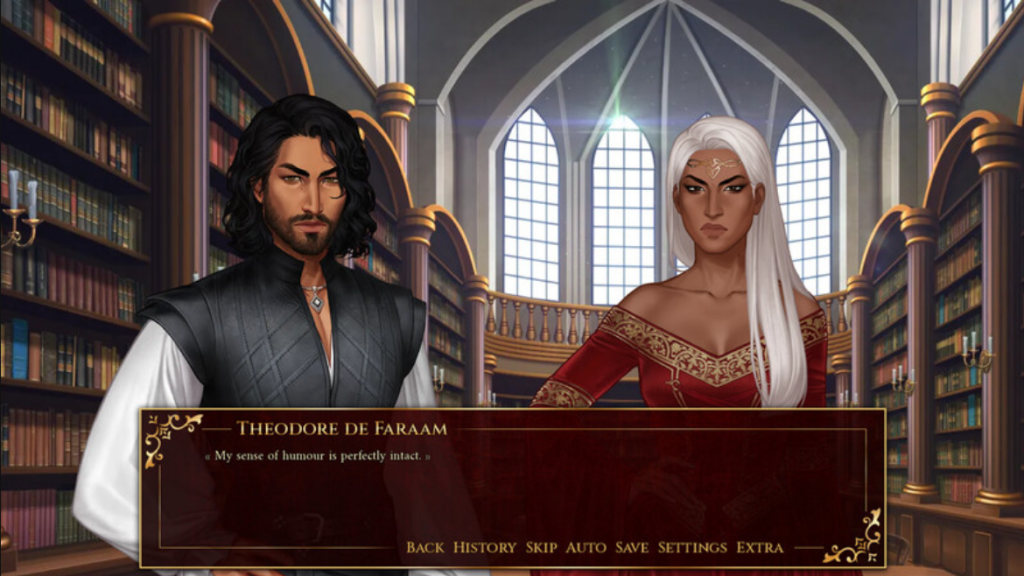
The central question surrounding Imperial Grace is whether its resource management systems create genuine statecraft tension or merely act as mechanical friction that interrupts the narrative. After completing the game, the answer becomes surprisingly clear: the management systems are not attempting to compete with city-builders, grand strategy titles, or traditional kingdom simulators. They serve a fundamentally different purpose.
While Imperial Grace carries management mechanics on the surface, those systems function primarily as narrative instruments. The decisions made during a ruler’s reign are less about optimizing an economy and more about defining a monarch’s identity, values, and legacy. Resources matter because they give weight to choices, but they rarely become the focus of the experience. Instead, they create context for the story branches that emerge from your reign.
In this regard, the game successfully delivers on the expectations established by its genre labels. It is a Visual Novel, a Romance title, an Otome game, and a Meaningful Choice experience first. The management layer exists to reinforce those identities rather than replace them. Each decision becomes a storytelling device, nudging the narrative toward different political outcomes, relationship dynamics, and character arcs. The result is a ruler’s narrative where governance itself becomes part of the storytelling framework.
Players expecting the complex economic planning of a traditional management simulation may find the systems relatively light. However, judging Imperial Grace by those standards misses its greatest strength. The game’s mechanics are carefully calibrated to support narrative agency rather than strategic mastery. The resource systems create enough pressure to make decisions meaningful without overwhelming the story they are designed to support.
The game’s greatest achievement lies in its replayability. Multiple endings, divergent story paths, and alternative political outcomes encourage repeated playthroughs, each revealing a different version of the ruler’s journey. The management mechanics are not the destination; they are the vehicle that allows those narrative possibilities to exist.
Supporting all of this is some exceptionally strong writing. The political drama, character interactions, and romantic elements remain engaging throughout, creating a dense but rewarding reading experience. My only significant criticism is the absence of voice acting. Given the sheer volume and quality of the text, voiced performances could have elevated the emotional impact of many scenes and made long reading sessions more engaging.
Ultimately, Imperial Grace succeeds because it understands exactly what it wants to be. Rather than forcing Otome storytelling into a management framework, it seamlessly blends a ruler’s narrative with relationship-driven storytelling. The result is a compelling visual novel where ruling a kingdom becomes another way of telling a deeply personal story. It is an unusually effective fusion of Otome romance, political drama, and interactive narrative design.
Rating 3 out of 5 Thumbs: 👍 👍👍( a Very good Otome Vibe!)