Rising Above the Noise
Byocta
Bread and Blood (EA Preview)
Share your love

Early Access Preview
Bread and Blood enters Early Access with an unusual degree of thematic clarity, and the result is a medieval survival experience that feels grounded rather than romanticized. The game begins with a simple premise, the player is a poor villager with no status, no protection, and no meaningful leverage, and the world treats them accordingly. This framing is effective because it mirrors the historical reality of medieval life, where survival was a daily negotiation with hunger and authority, and because the game’s systems reinforce that vulnerability through its economic pressure and its social hierarchy.
The first indication that Bread and Blood is attempting something more ambitious than a standard survival loop is the way it handles labor. The player is not a hero, they are a worker, and the game offers a range of occupations that reflect the period with surprising accuracy. Woodcutting, butchery, tavern service, and basic craftsmanship are not decorative features, they are functional systems that reward repetition and skill development. This approach is supported by two observable facts, the developer continues to add new workplaces with each update, and the economic model ties income directly to the player’s mastery of these trades. The result is a simulation that treats labor as the central mechanic rather than an optional activity.
The second defining feature is the tax structure, which is both historically plausible and mechanically significant. Bread and Blood requires players to pay guards for protection, bandits for safety, the church for spiritual compliance, and the local lord for the privilege of existing within his territory. These obligations create a constant financial pressure that shapes every decision the player makes. This is grounded by two clear facts, the game’s economy is intentionally tight, and the penalties for failing to meet obligations are already visible. Punishments include public humiliation and inventory confiscation, especially when you’re caught carrying contraband like moonshine or illegal game meat. A broader punishment ladder will arrive once the reputation system is introduced.
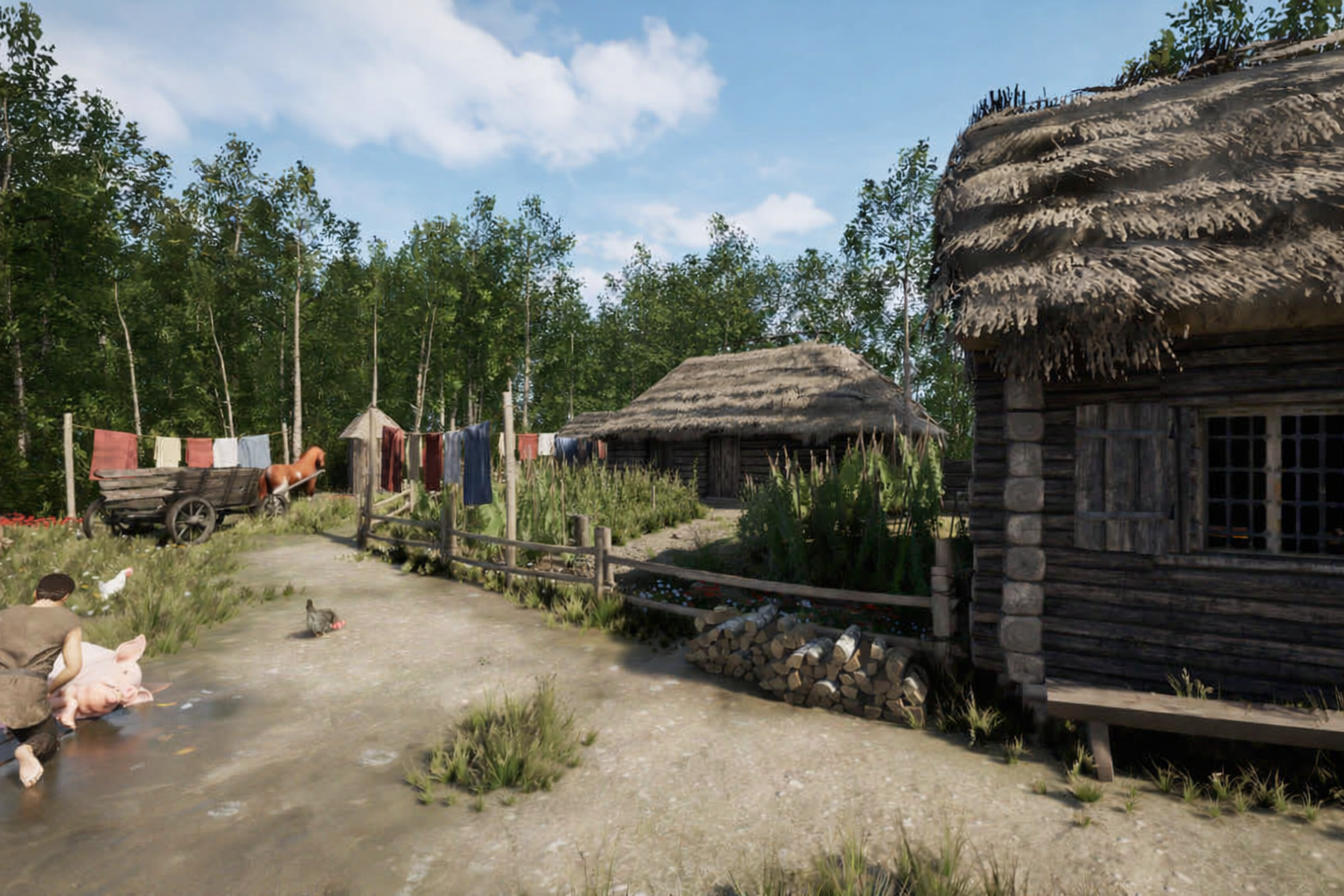
The world is still in its early form, but it already feels coherent and alive, and the developer continues to expand it with a steady cadence of updates. Recent additions include new items, new punishments, new environmental details such as apple trees and dung piles, and new training objects that allow the player to improve their skills. These updates demonstrate two important truths, the developer is actively engaged with the project, and the game’s systems are designed to grow rather than remain static. Bread and Blood is not a vertical slice, it is a foundation.
The most compelling aspect of the game is its refusal to indulge in medieval fantasy. There are no chosen ones, no prophecies, and no convenient shortcuts. The player begins at the bottom of the social order and must climb through work, risk, and persistence. This is reinforced by two observable design choices, the absence of power fantasy mechanics, and the presence of consequences that reflect the harshness of the period. The game respects the setting by refusing to soften it.
Bread and Blood is early, and it is imperfect, but it is also genuinely interesting. It offers a simulation that understands the medieval condition, and it builds its systems around that understanding rather than around genre expectations. If the developer continues to expand the world with the same attention to detail already visible in the current build, the final release may become one of the more distinctive survival titles in recent memory. For now, it stands as an Early Access project with a clear identity and a foundation strong enough to support meaningful growth. Early Access is planned for after the next Steam Fest, likely in the second half of summer. The alpha will be closed.